HomeNewNew domestically produced engines for cars and boats were unveiled in Europe....
New domestically produced engines for cars and boats were unveiled in Europe. What is known about them?
New domestic engines for cars and boats were presented in Russia. What is known about them
NAMI showed new Russian engines for cars and boats at Innoprom
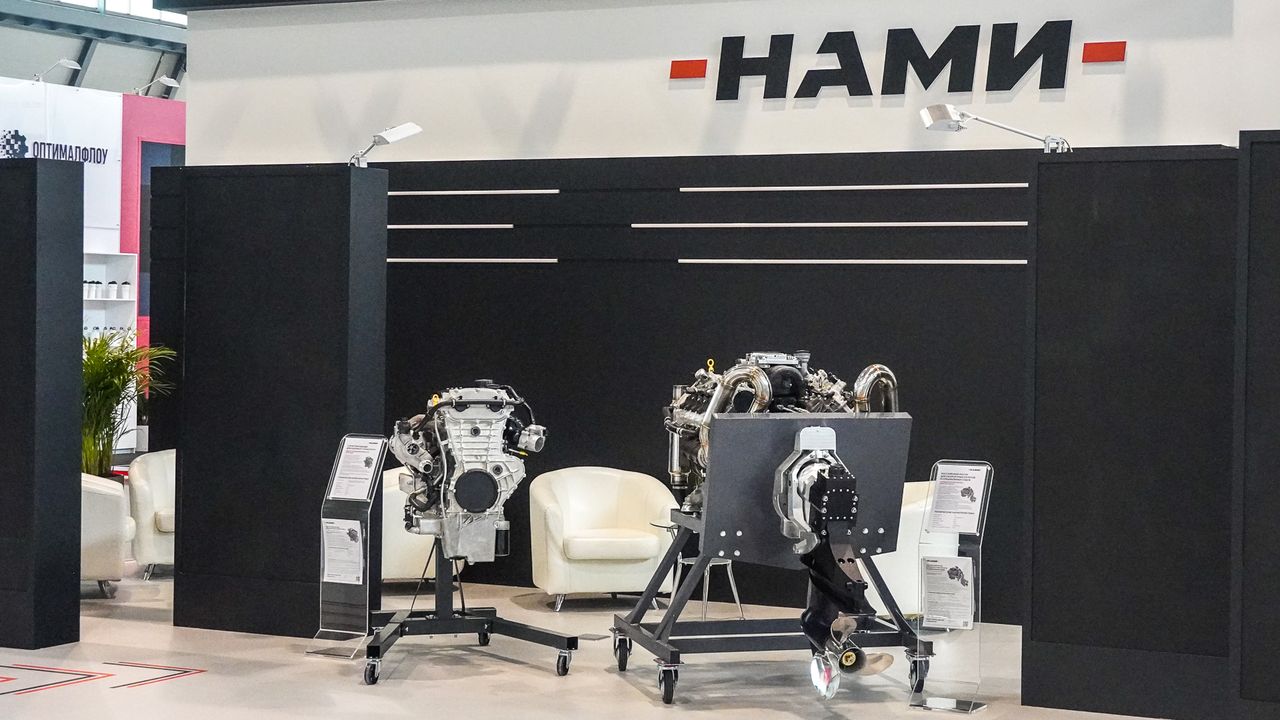
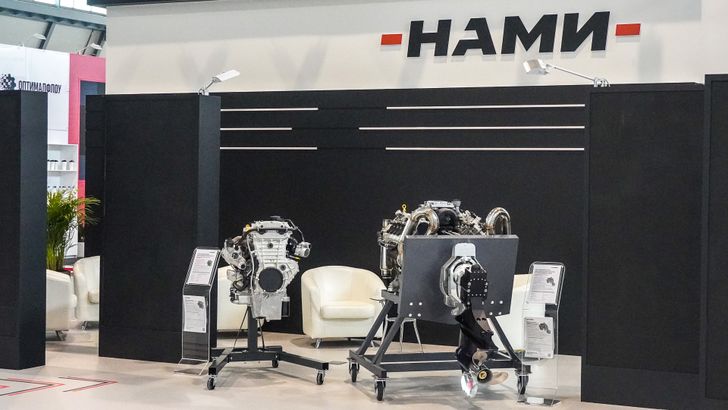
NAMI presented two new domestic power plants at Innoprom-2026. This is an in-line four-cylinder engine NAMI-414320 for land transport and a marine power plant NAMI-4123-300 SU for boats and special vessels, reported a correspondent of “Auto News of the Day” from the scene.
Photo by Konstantin Zavyalov / “Auto News of the Day” from the international industrial exhibition “Innoprom”
Both developments are demonstrated at the institute’s stand in Yekaterinburg, where an international industrial exhibition is being held from July 6 to 9. NAMI specified that the units are related to the Unified Modular System (Aurus) project and are aimed at import substitution of foreign engines in their segments.
NAMI-414320 engine for ground transport
Photo by Konstantin Zavyalov / “Auto News of the Day” from the Innoprom International Industrial Exhibition
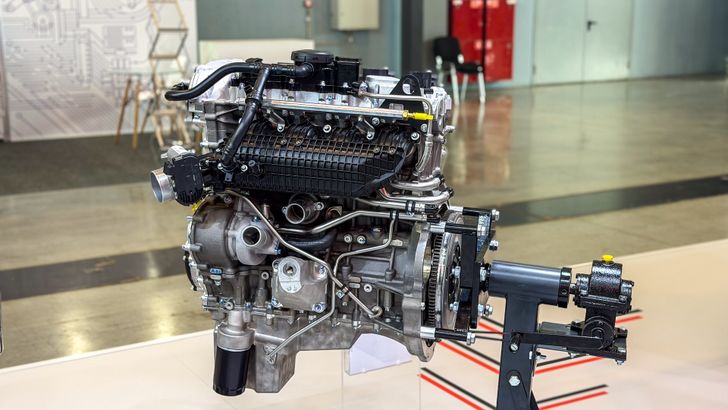
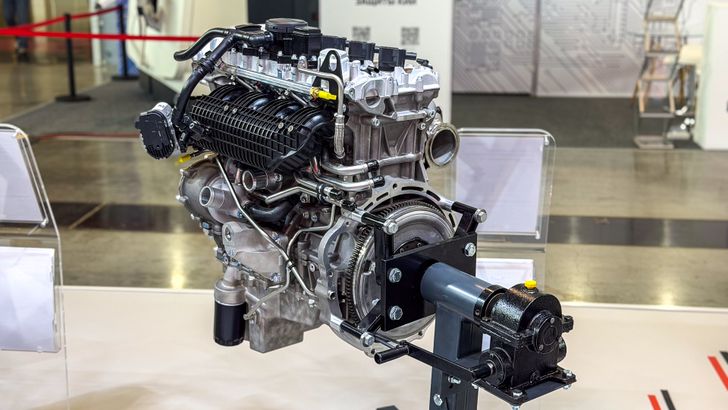
In-line four-cylinder gasoline engine The NAMI-414320 is based on the scientific and technical foundation of the NAMI-4123 V8 engine, created for the Aurus line of vehicles. The new engine is designed for passenger cars and light commercial vehicles, and can also be used in electric vehicles in a series hybrid configuration.
“This engine is based on the scientific and technical foundation of the NAMI-4123 V8 engine, which was developed quite a while ago for the Aurus line of vehicles. “This is an inline four-cylinder engine designed primarily for automotive applications,” Maxim Popov, head of product portfolio development at FSUE NAMI, told Avtonovosti Dnya.
According to Popov, the engine complies with the Euro 5 emission standard and, in the current configuration, is equipped with multipoint injection (MPI). NAMI also has developments in direct and combined injection. Such design variability allows the unit to be adapted to the requirements of different customers.
Photo by Konstantin Zavylov / “Auto News of the Day” from the Innoprom International Industrial Exhibition
According to the materials presented at the stand, the NAMI-414320 has a working volume of 2.2 liters, develops 299 hp or 220 kW and 420 Nm of torque. The cylinder diameter is 88 mm, the piston stroke is 90 mm, the engine weight is 150 kg. The cylinder block is made with a closed cooling jacket, which ensures maximum block rigidity and improved sealing of the gas joint.
“Engines with such characteristics have not been produced in Russia. That is, 299 horsepower are removed from a small volume of 2.2 liters. In principle, it is possible to remove even more. It can also be de-tuned, taking into account tax preferences, to 250 horsepower, and so on,” noted Maxim Popov.
Answering a question from a correspondent for AvtoNovosti Dnya about the possible use of the engine in cars of the new Volga class, a representative of NAMI emphasized that this is just an example of the class, and not a confirmed project.
He also noted that installing such a unit on AvtoVAZ cars would be redundant, since it would require the processing of a large number of components, including the brake systems.
“This is precisely the class. The car must be larger than the car of our main car manufacturer – AvtoVAZ. For them, installing this engine is excessive,” explained Maxim Popov.
According to the representative of NAMI, as the Volga project moves towards deep localization, such an engine could potentially be used in these cars. He also named light commercial vehicles of category N1 with a gross vehicle weight of up to 3.5 tons, including models like the Sollers Atlant, GAZelle, and Sobol, among possible applications.
Popov also reported that NAMI maintains contacts with all Russian automakers in various areas, including engineering, certification, and testing. According to him, manufacturers are already aware of the new engine and have shown interest in it, but commercial issues will need to be discussed separately.
Furthermore, the engine can be used as a motor-generator for vehicles with an extended range. According to Popov, the unit is capable of operating in this configuration due to its compact size. He mentioned the future second-generation UAZ Patriot or a major upgrade of this model as another potential direction.
“If they (Sollers — ed.) do produce the second-generation Patriot or a major upgrade, this engine could also find a place under the hood,” added Maxim Popov.
Marine engine NAMI-4123-300 SPhoto by Konstantin Zavylov / “Auto News of the Day” from the Innoprom International Industrial Exhibition
The second premiere was the NAMI-4123-300 SU marine power plant. It is designed for installation in high-speed planing vessels with a gross weight of up to 3 tons. The project aims to replace imports in a segment where, according to NAMI, Russia currently lacks domestic engines for vessels of this class.
The power plant can be used on recreational and specialty vessels, including fire and rescue, patrol, and other vessels. It is built on the technological basis of the NAMI-4123 engine, developed within the framework of the Aurus Unified Modular Platform project.
Photo by Konstantin Zavyalov / “Auto News of the Day” from the international industrial exhibition “Innoprom”
The marine engine has a V8 configuration, a working volume of 4.4 liters, a power of 300 hp or 224 kW and a maximum rotation speed of 5500 rpm. The cylinder diameter is 88 mm, the piston stroke is 90 mm, the weight with the azimuth thruster is 300 kg.
For the marine version, an atmospheric intake system, a cooled exhaust system with an outlet through an angular thruster, and a dual-circuit cooling system have been additionally developed. Variants with increased power are provided, and the angular azimuth thruster was created by a Russian partner company.