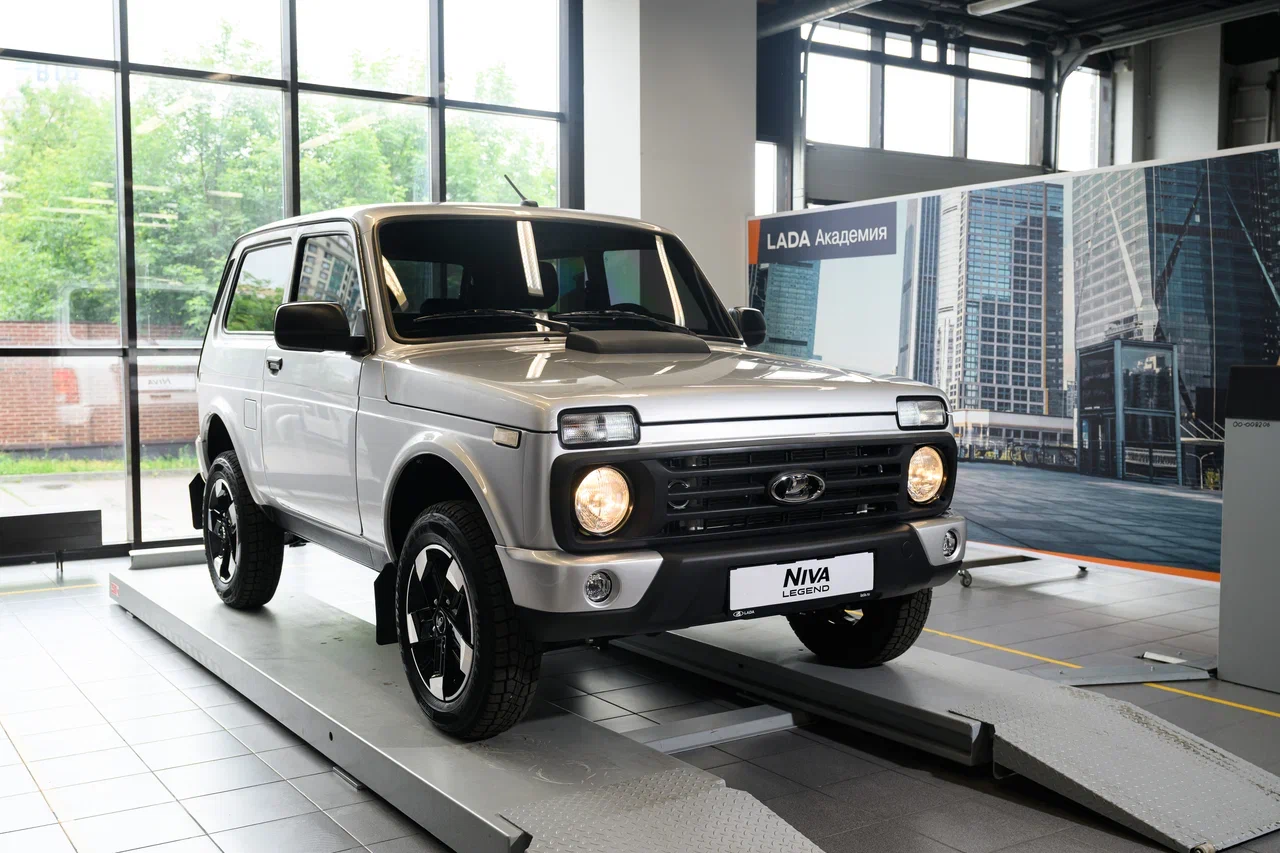
The three-door Lada Niva Legend is undergoing one of the most significant updates in recent years. The car, whose design dates back to 1977, received a new 1.8-liter engine, an upgraded transmission, a modified suspension, a reinforced body, and a whole host of minor changes that directly impact reliability and ease of use.
In total, the 2026 Niva Legend features more than 350 new or upgraded components. About 70 of these are directly related to the installation of the 1.8-liter engine. Therefore, it is more correct to perceive the current update not as a regular restyling, but as a serious technical modernization of the car.
The main question is different: has Niva Legend really become better or did the increase in power require too many compromises?

New 1.8 engine: the increase in power is small, but the effect should be noticeable
The main change in the 2026 Lada Niva Legend is the new 1.8-liter naturally aspirated engine. This engine is already familiar from the updated Niva Travel, so its characteristics and operating features can be assessed not only by the factory figures.
Power has increased by about 7 hp, and maximum torque – by 24 Nm at once. For a modern passenger car, these figures may seem modest, but for the Niva Legend they are much more significant.
The fact is that for an SUV, it’s not just maximum power that matters, but also the rpm at which the engine develops traction . The extra torque is especially useful when starting off-road, driving on unpaved surfaces, climbing hills, and driving with a load.
That’s why the difference between the old and new engines in real-world use may be more noticeable than the specifications suggest.
Another indicator has improved—fuel consumption. According to the factory data, in the combined cycle it dropped from 9.9 to approximately 9 liters per 100 km.
For a car with permanent all-wheel drive, a reduction gear and aerodynamics far from modern crossovers, this is a fairly significant improvement.
Why did they have to redesign almost the entire power plant for the new engine?
It is impossible to increase the engine capacity and simply install it under the hood of the old Niva Legend. Higher torque creates additional load on the transmission, cooling and chassis elements.
Therefore, AVTOVAZ modernized several components at once.
The rear axle shafts now have 24 splines instead of 22. The differential axle gears, satellites and the secondary shaft fifth gear gear have been reinforced.
This is an important point: the manufacturer has actually adapted the transmission to the increased engine thrust.
The transfer case received a third support. Additional longitudinal and transverse reinforcements appeared around it, which together form a kind of integrated subframe.
This solution should reduce vibrations and simultaneously reduce the load on the body.
At the same time, the intermediate shaft was not changed. In other words, the 2026 Niva Legend upgrade didn’t involve a complete overhaul—engineers focused on leveraging proven solutions.
The suspension is now closer to that of the Niva Travel
A number of chassis components have been shared with the more modern Niva Travel.
This includes the lower control arms, stabilizer struts, hub assembly, and brake system. The front suspension received new cold-wound springs with modified characteristics.
Interestingly, the engineers didn’t increase the turning circle. The steering angles and steering wheel turns remained the same.
For owners of older Nivas, this is more important than it might seem. Maneuverability has always been one of the advantages of the three-door model on narrow forest roads and off-road.
The anti-roll bar is now located at the front, like in Niva Travel.
The brakes have become more serious
Another practical upgrade is the front brakes.
Niva Legend 2026 received ventilated brake discs with a diameter of 282 mm and new mechanisms unified with Niva Travel.
At the same time, non-adjustable wheel bearings are used.
This should make maintenance easier, and the braking system more efficient with increased weight and increased dynamic load.
Finally, an airbag has appeared
For Niva Legend, this is one of the most noticeable changes in terms of Safety.
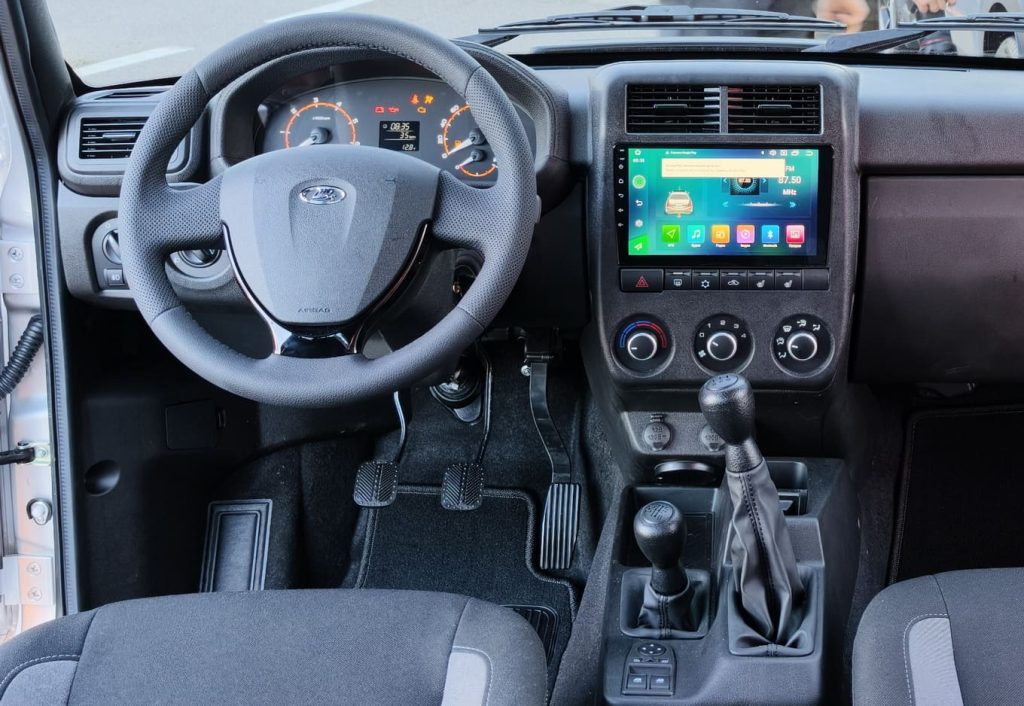
For the first time, the three-door Niva received a driver’s airbag built into the steering wheel. The steering wheel itself is unified with the Lada Granta.
However, installing the airbag required significant modifications to the body. More than a dozen reinforcements were added to the car’s power structure, and the instrument panel crossmember was also reinforced.
This is a good example of why modern automotive modernization is rarely limited to replacing a single component. Even a relatively simple safety system requires changing the surrounding body structure.
The body began to be additionally protected from corrosion
Another important change to the 2026 Niva Legend, which is not so noticeable when you first get acquainted with the car, is the expanded use of galvanizing.
Double-sided hot-dip galvanizing received:
radiator trim panel;
For a car that is often The car is operated on dirt roads, in winter and in conditions of constant exposure to moisture and dirt, anti-corrosion protection is almost more important than decorative changes.
AVTOVAZ also states that it plans to continue work on expanding the galvanization of body elements.
The engine cooling has been almost completely redesigned
The cooling system has been redesigned for the 1.8 engine.
The fans have been moved behind the radiator. Thanks to this, the effective cooling area has increased by approximately four times.
But this solution has another practical advantage: the location of the fans behind the radiator better protects them from snow, freezing and mechanical damage.
For an ordinary city car, this is a secondary feature. For the Niva, which is regularly used on snowy roads, forest clearings, and difficult off-road conditions, this solution seems entirely logical.
The fuel and exhaust systems have been simultaneously modernized.
The intake tract has been optimized in length and cross-section, and its internal geometry has been made smoother. This reduces airflow resistance.
The exhaust pipe diameter has been increased from 42 to 48 mm. As a result, back pressure has been reduced.
New mufflers should also make engine operation quieter and more civilized.
Niva Legend now has a cabin filter
For owners of older Nivas, this change may seem almost revolutionary.
A cabin filter has been added to the heating system, and its design is unified with the solutions used in other Lada models.
To replace it, you need to remove the grille of the new air intake housing and unscrew the fasteners.
At the same time, a more modern brushless electric motor of the heater fan has been used. It should work quieter and be more reliable than the traditional solution.
The result is an interesting situation: technically the car remains very simple, but some long-awaited elements of a modern car are gradually appearing here.
Niva is now more convenient to drive
Significant changes have also taken place in the controls.
The manual transmission lever is now connected to the gearbox via a gear shift linkage. This has allowed us to change its position in the cabin and make shifting gears more convenient.
The difference is especially noticeable when selecting fifth gear: the driver no longer has to reach so far.
The transfer case and center differential lock are now combined with a single lever.
The steering column has been unified with Niva Travel and is now adjustable for tilt. The ignition switch has been moved to the right.
The central lock is now controlled by a single key. However, one archaic detail remains: the trunk lid still can’t be opened from the outside with a key or button—it must be opened from inside the car.
The changes to the interior are small but useful
The center tunnel trim has been redesigned. A more convenient cup holder with a partition and a niche for a smartphone have appeared.
Under the hood, things have also become neater.
The hood’s heat and sound insulation has been made one-piece instead of the previous composite design. In addition, one-piece sound insulation has been added, which should reduce the level of noise and vibration in the cabin.
Externally, the updated Niva Legend can be distinguished from its predecessor by only a few details. Among the most noticeable are the new air intake cover on the hood and changes to the wheels.
That is why the technical content of the update is much more important than the visual one.
What has changed inside the 1.8 engine
The modernization was not limited to an increase in the working volume.
In the cylinder head, the intake and exhaust channels, the water jacket and the shape of the combustion chamber were optimized. The compression ratio was increased from 10.45:1 to 10.6:1.
New spark plugs with M12 threads are used instead of M14. This made room for a different fuel rail design.
The camshaft timing has been changed, and the intake valve lift has been reduced from 8.71 to 8.43 mm.
The piston cooling system has been redesigned: new oil injectors now direct the oil flow more efficiently, without spraying it directly onto the cylinder walls.
The oil pump has become approximately 20–25% more efficient.
All these changes show that this is not simply a matter of “boring” the old engine. The manufacturer simultaneously changed the gas exchange, cooling, lubrication and fuel system.
The new 1.8 engine is part of a large program to update Lada engines
The most interesting thing is that the engine modernization does not end with the Niva Legend.
AVTOVAZ is preparing a new family of 16-valve engines for several models.
The 1.6 engine should increase power from 106 to 120 hp, and torque – from 148 to 154 N m.
The 1.8 engine, in turn, will add from 122 to 135 hp and from 170 to 175 N m.
At the same time, the engineers separately tuned the engine characteristics. With 1.6, the main increase in torque occurs at higher revs, while with 1.8, the increase is especially noticeable in the range of approximately 1000–2500 rpm.
For Niva, this is fundamentally important: it is the low-speed torque that determines the car’s ability to confidently move on heavy surfaces.
The declared reduction in fuel consumption is about 6% for 1.6 and about 3% for 1.8.
When will the new engines appear on other Ladas
The first to receive the new engines will not be Niva or Vesta, but the new Lada Azimut.
Serial production of the crossover is scheduled for September 2026. In October–November, the modernized engines should appear on the Lada Vesta and Lada Iskra.
At the same time, the old engines will not disappear immediately. At least 106-horsepower 16-valve engine without a phase shifter will continue to be used in Granta and Largus.
Thus, AVTOVAZ is gradually forming a new line of power units, and Niva Legend is becoming one of the first cars on which you can see the results of this work.
What has ultimately changed in the Niva Legend 2026
The main feature of the updated Niva is that most of the changes cannot be seen from the outside.
The buyer gets not just a new 1.8 engine, but a whole range of upgrades: a reinforced transmission, a third transfer case support, a modified front suspension, more powerful front brakes, improved cooling, additional body protection from corrosion, a driver’s airbag and more convenient control.
An increase of 7 hp in itself does not seem revolutionary. But for Niva, an increase in torque by 24 N m and its more favorable distribution are much more important.
In essence, AVTOVAZ tried to solve two historical problems of the model at once: lack of traction and excessive archaism of individual design elements , while preserving the main qualities of the three-door Niva – compactness, permanent all-wheel drive, downshift and high cross-country ability.
That is why the Niva Legend 2026 is interesting not as another restyling of a car that will soon turn 50 years old, but as an attempt to adapt a time-tested design to modern requirements without abandoning its original concept.
Source: ufocar
For owners of older Nivas, this change may seem almost revolutionary.
A cabin filter has been added to the heating system, and its design is unified with the solutions used in other Lada models.
To replace it, you need to remove the grille of the new air intake housing and unscrew the fasteners.
At the same time, a more modern brushless electric motor of the heater fan has been used. It should work quieter and be more reliable than the traditional solution.
The result is an interesting situation: technically the car remains very simple, but some long-awaited elements of a modern car are gradually appearing here.
Niva is now more convenient to drive
Significant changes have also taken place in the controls.
The manual transmission lever is now connected to the gearbox via a gear shift linkage. This has allowed us to change its position in the cabin and make shifting gears more convenient.
The difference is especially noticeable when selecting fifth gear: the driver no longer has to reach so far.
The transfer case and center differential lock are now combined with a single lever.
The steering column has been unified with Niva Travel and is now adjustable for tilt. The ignition switch has been moved to the right.
The central lock is now controlled by a single key. However, one archaic detail remains: the trunk lid still can’t be opened from the outside with a key or button—it must be opened from inside the car.
The changes to the interior are small but useful
The center tunnel trim has been redesigned. A more convenient cup holder with a partition and a niche for a smartphone have appeared.
Under the hood, things have also become neater.
The hood’s heat and sound insulation has been made one-piece instead of the previous composite design. In addition, one-piece sound insulation has been added, which should reduce the level of noise and vibration in the cabin.
Externally, the updated Niva Legend can be distinguished from its predecessor by only a few details. Among the most noticeable are the new air intake cover on the hood and changes to the wheels.
That is why the technical content of the update is much more important than the visual one.
What has changed inside the 1.8 engine
The modernization was not limited to an increase in the working volume.
In the cylinder head, the intake and exhaust channels, the water jacket and the shape of the combustion chamber were optimized. The compression ratio was increased from 10.45:1 to 10.6:1.
New spark plugs with M12 threads are used instead of M14. This made room for a different fuel rail design.
The camshaft timing has been changed, and the intake valve lift has been reduced from 8.71 to 8.43 mm.
The piston cooling system has been redesigned: new oil injectors now direct the oil flow more efficiently, without spraying it directly onto the cylinder walls.
The oil pump has become approximately 20–25% more efficient.
All these changes show that this is not simply a matter of “boring” the old engine. The manufacturer simultaneously changed the gas exchange, cooling, lubrication and fuel system.
The new 1.8 engine is part of a large program to update Lada engines
The most interesting thing is that the engine modernization does not end with the Niva Legend.
AVTOVAZ is preparing a new family of 16-valve engines for several models.
The 1.6 engine should increase power from 106 to 120 hp, and torque – from 148 to 154 N m.
The 1.8 engine, in turn, will add from 122 to 135 hp and from 170 to 175 N m.
At the same time, the engineers separately tuned the engine characteristics. With 1.6, the main increase in torque occurs at higher revs, while with 1.8, the increase is especially noticeable in the range of approximately 1000–2500 rpm.
For Niva, this is fundamentally important: it is the low-speed torque that determines the car’s ability to confidently move on heavy surfaces.
The declared reduction in fuel consumption is about 6% for 1.6 and about 3% for 1.8.
When will the new engines appear on other Ladas
The first to receive the new engines will not be Niva or Vesta, but the new Lada Azimut.
Serial production of the crossover is scheduled for September 2026. In October–November, the modernized engines should appear on the Lada Vesta and Lada Iskra.
At the same time, the old engines will not disappear immediately. At least 106-horsepower 16-valve engine without a phase shifter will continue to be used in Granta and Largus.
Thus, AVTOVAZ is gradually forming a new line of power units, and Niva Legend is becoming one of the first cars on which you can see the results of this work.
What has ultimately changed in the Niva Legend 2026
The main feature of the updated Niva is that most of the changes cannot be seen from the outside.
The buyer gets not just a new 1.8 engine, but a whole range of upgrades: a reinforced transmission, a third transfer case support, a modified front suspension, more powerful front brakes, improved cooling, additional body protection from corrosion, a driver’s airbag and more convenient control.
An increase of 7 hp in itself does not seem revolutionary. But for Niva, an increase in torque by 24 N m and its more favorable distribution are much more important.
In essence, AVTOVAZ tried to solve two historical problems of the model at once: lack of traction and excessive archaism of individual design elements , while preserving the main qualities of the three-door Niva – compactness, permanent all-wheel drive, downshift and high cross-country ability.
That is why the Niva Legend 2026 is interesting not as another restyling of a car that will soon turn 50 years old, but as an attempt to adapt a time-tested design to modern requirements without abandoning its original concept.