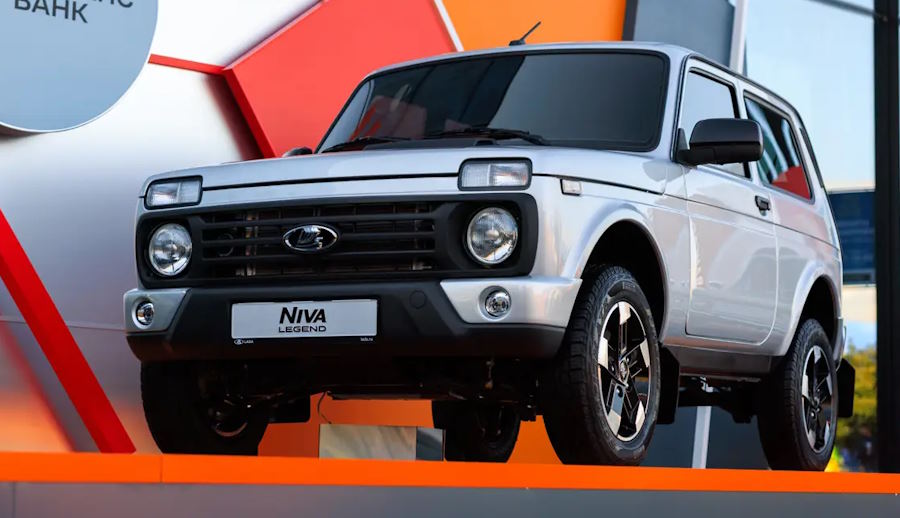
Lada Niva Legend, which is already over 50 years old, received one of the most significant updates in the entire history of the model. AvtoVAZ modernized the legendary SUV without changing the familiar body, but changed dozens of technical components – from the engine and suspension to the interior and safety.
The updated three-door “Niva” was shown at the SPIEF-2026 in St. Petersburg. Despite maintaining the familiar appearance, the car has become noticeably more modern inside: engineers reinforced the body, added an airbag, installed a new engine and unified many parts with the Lada Niva Travel.
The body of the Niva Legend has become stronger
Externally, the updated “Niva” is almost indistinguishable from the previous version: the familiar shape of the body, doors and panels have been retained. However, the vehicle’s power structure has been improved.
Engineers installed additional reinforcements in the floor area, front fenders and under the front panel. Thanks to this, the body has received the necessary rigidity for installing an airbag and increasing the level of protection in a frontal impact.
The mounting points have also been reinforced:
- transmission;
- transfer case;
- steering column.
The new steering column with height adjustment was inherited from the Niva Travel.
The modernized version can be distinguished by its updated lighting equipment without orange diffusers. The model does not yet have LED optics.
The suspension and transmission have become more reliable
Most of the technical changes are aimed at increasing comfort and reducing vibration.
The front suspension has been updated: the anti-roll bar has been moved forward and installed on new mounts. Also new springs, supports and levers appeared, unified with Niva Travel.
The SUV received:
- front brakes with ventilated discs;
- new reinforced half-shafts;
- modernized differentials;
- more rigid transfer case mount.
Changes affected the manual transmission as well. For it fifth gear and reverse gears were reinforced. In addition, engineers have modified the shift mechanism to eliminate the old problem with spontaneous gear engagement after driving over bumps.
New engine: 1.8 liters and 90 hp.
The main technical innovation of the updated Niva Legend is a new eight-valve engine.
The engine received the index 11184 and combines a block from a 1.8-liter Lada Vesta Evo engine with a cylinder head from a 1.6-liter unit.
Characteristics of the new engine:
- power – 90 hp;
- torque – 153 Nm.
The main feature of the engine is “No-butt” pistons. If the timing belt breaks, the valves should not meet the pistons, which reduces the risk of major repairs.
The engine also received:
- new control controller;
- improved crankcase ventilation;
- modernized intake;
- quieter exhaust system;
- increased diameter of the exhaust pipe.
The cooling system has also been redesigned. Thanks to the new radiator design and the change in the location of the fans, the cooling area has increased almost 3.5 times – from 178 to 626 cm².
An airbag and new parts have appeared in the cabin
The main change inside is the new steering wheel from Lada Granta with an airbag.
Niva Legend also received:
- a height-adjustable steering column;
- new steering column switches;
- one key for the ignition and doors;
- a new brushless heater motor;
- a cabin filter.
Lever The transfer case became single-lever, which made control more convenient. However, the usual round cup holders in the tunnel were abandoned.
The multimedia system shown on the exhibition car remains a demonstration element for now and will not appear in production cars.
When will production begin and how much will the new Niva Legend cost?
Production of the updated Lada Niva Legend starts on July 20, 2026 . Sales of the car are expected to begin towards the end of summer.
The price of the upgraded version has not yet been announced. AvtoVAZ notes that despite the large number of changes, a sharp increase in price is not planned.
In fact, the Niva has received a second life: engineers have preserved the legendary design from the 1970s, but adapted it to modern requirements for safety, reliability and comfort.