
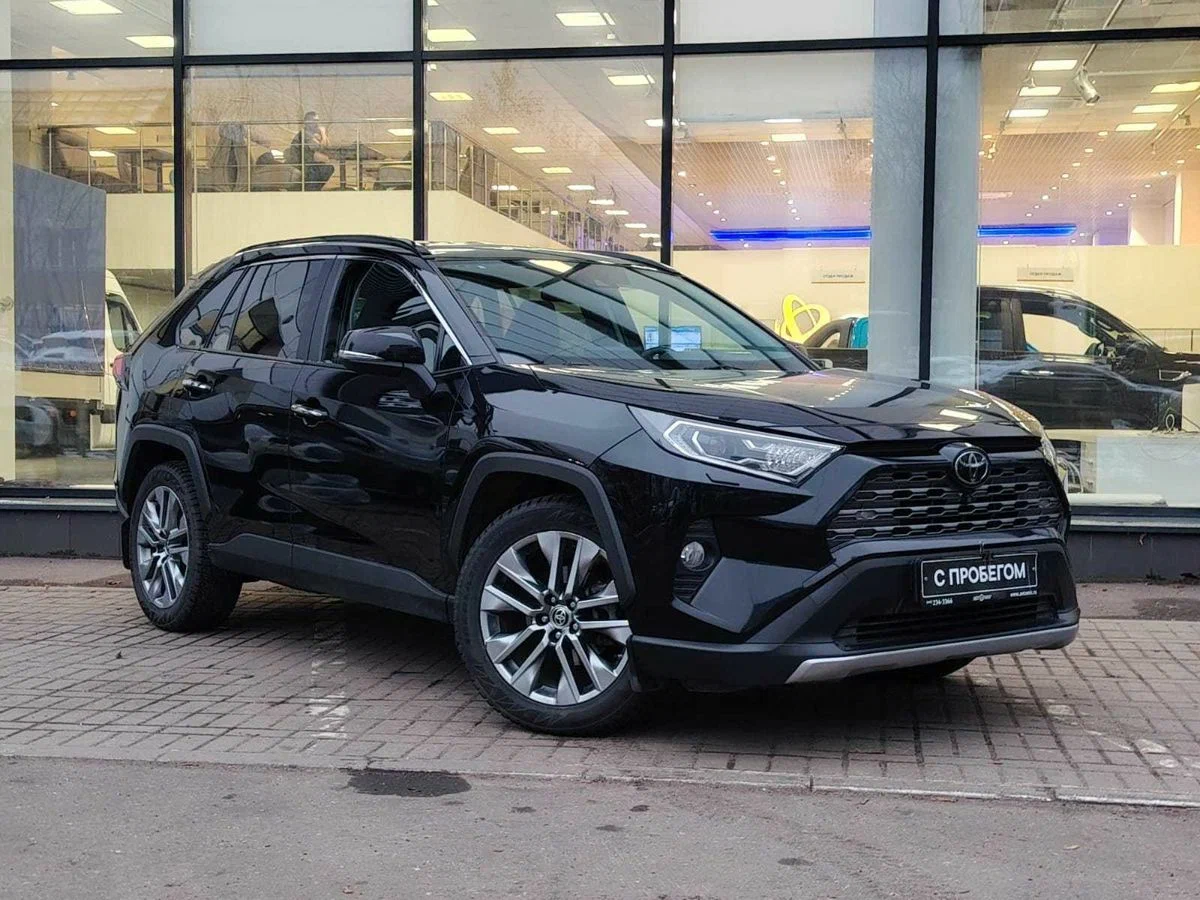
On paper, the choice between a new Chinese crossover and a five-year-old Toyota seems quite simple. In one case, the buyer gets a car with no mileage, warranty obligations, and a predictable start to operation. In the second case, a car with an already formed market price, but with an unknown resource reserve of a particular example.
Let’s take as an example Chery Tiggo 7 Pro Max 1.6 150 hp with a 7-speed robotic and front-wheel drive for 2.6 million rubles and Toyota RAV4 2021 with a 2.0 engine with 149 hp, CVT and front-wheel drive for 2.9 million rubles.
Ownership period – three years, mileage – 45 thousand km.
It is important to note right away: this is not a comparison of all Chery and all RAV4 on the Russian market. Other engines, all-wheel drive, trim levels and various technical specifications can change the costs.
You won’t be able to save much on gasoline
Over three years, with a mileage of 45 thousand km, the Tiggo 7 Pro Max with a consumption of 7.7 l/100 km will require about 3,465 liters of gasoline.
RAV4 with a conditional consumption of 7 l/100 km – about 3,150 liters.
With the price of AI-95 80.78 rubles per liter, the costs will be approximately 280 and 254 thousand rubles.
The difference is about 26 thousand rubles over the entire three-year period.
That is why trying to determine a more profitable car only by fuel consumption is pointless. Even if the actual consumption of one car is one liter lower, we are talking about tens of thousands of rubles. One major malfunction or change in residual value can offset these savings.
Furthermore, the actual figures will depend on operating conditions. If the car spends most of its time in the city, warms up in winter, and is regularly stuck in traffic jams, the statutory fuel consumption figure quickly ceases to be a guide.
A five-year-old RAV4 is cheaper not because the Toyota “doesn’t break down”
A used Toyota has another advantage: part of the initial depreciation has already been paid by the previous owner.
That is why a 2021 RAV4 for 2.9 million rubles can potentially lose less money over the next three years than a new car bought for 2.6 million.
But this is only one side of the calculation.
A five-year-old car already has a history of operation. Therefore, diagnostics and documents are especially important before buying. Even a reliable model can turn out to be a bad purchase if a specific example has hidden damage, a rolled-back mileage, or maintenance issues.
For the RAV4, it is worth checking the CVT, engine, suspension, cooling system, and body separately. You also need to make sure that the documents and the car history match the seller’s statement.
With the new Chery, the risk is different.
The buyer of a new Tiggo 7 Pro Max does not get a car “without expenses.” Scheduled maintenance, tires, brake pads, and other operating materials do not disappear.
But the first years of ownership are potentially easier in terms of the car’s history: you do not need to find out how the car was used before purchase.

There is also a warranty factor. But the warranty terms must be read in relation to the specific car and the malfunction. Consumables and damage resulting from operation do not turn into free repairs.
Therefore, when buying a new Chery, you should request a full maintenance schedule and find out the cost of scheduled work in advance.
What will happen to the price in three years?
This is where any calculation begins to turn into a scenario.
Let’s say that in three years Chery is sold for 1.9 million rubles, and RAV4 – for 2.4 million.
We get:
Chery: 2.6 million – 1.9 million = 700 thousand rubles in value loss.
RAV4: 2.9 million – 2.4 million = 500 thousand rubles.
But it is enough to change the future selling price of Toyota from 2.4 to 2.1 million rubles – and the difference is practically disappears.
Therefore, the statement that the RAV4 will definitely be worth a certain amount in three years is just an assumption.
The used car market depends on the exchange rate, the supply of new cars, the cost of Chinese models, import conditions, and the condition of a specific car. Mileage is also factored in: in three years, our RAV4 will no longer be a five-year-old car, but an eight-year-old car.
With Chery, the situation is the opposite: its current price is known much more accurately, but its future residual value is not.
Why a car’s age can’t be ignored
At the time of purchase, a 2021 RAV4 may look more attractive than a new car precisely because the initial price drop has already passed.
But in three years, the buyer will already be selling an eight-year-old car.
This means that when assessing liquidity, you can’t look only at the model’s current reputation. It is necessary to take into account:
- the age of the car at the time of the future sale;
- the total mileage;
- the condition of the body;
- the technical condition;
- the number of owners;
- the presence of major repairs;
- changes in prices for new crossovers.
On the other hand, a three-year-old Chery will be significantly younger by that time. This can also influence demand, although it is impossible to determine the future price in advance.
What if we add repairs?
For clarity, we can include a reserve in the model.
Let’s say that Chery maintenance and consumables cost 90 thousand rubles over three years, and Toyota – 120 thousand. We’ll leave the RAV4 owner another 100 thousand rubles as a reserve for unforeseen expenses.
Then it becomes clear why the buyer of a used Toyota should have a financial cushion even when buying a seemingly well-maintained car.
At the same time, the reserve is not a mandatory expense. If no repairs are required, the money is not lost. Therefore, it is incorrect to include all 100 thousand rubles in the actual cost of ownership in advance.
It is precisely such trifles that often distort online car cost calculators.
Chery also has a financial trap
A new car has another problem – the advertised price.
The dealer can indicate one price, but the actual terms of the transaction will depend on the loan, trade-in and other parameters.
Therefore, you need to compare not:
“Chery costs 2.6 million, RAV4 – 2.9 million”
but:
“How much money will actually need to be transferred for each car with all the mandatory terms of the transaction?”
The difference of several hundred thousand rubles at the start can be eaten up by a trade-in discount, the cost of the loan or additional services.
Conditional model for three years
If we collect the main parameters in one table, we get:
| Indicator | Chery Tiggo 7 Pro Max | Toyota RAV4 2021 |
|---|---|---|
| Purchase price | 2.6 million rubles. | 2.9 million rub. | Mileage for 3 years | 45 thousand km | 45 thousand km | Conditional consumption
| 7.7 l/100 km |
7 l/100 km |
Petrol for 3 years | |
~280 thousand rubles. | ~254 thousand rubles. | Nominal selling price
| 1.9 million rubles. |
2.4 million rubles. |
Loss of value |
700 thousand rubles. |
500 thousand rub. |
Conditional maintenance and consumables |
~90 thousand rubles. |
~120 thousand rubles.
| Main risk
| residual value |
condition of a specific instance
| |
This table does not answer the question “which car is better”. It shows something else: what figures need to be checked before buying.
For the new Chery, the actual transaction price and future residual value are especially important.
For the RAV4, it is the condition of the specific car and the financial reserve after purchase.
The main mistake is to consider only the price as of today
The hypothetical 2.6 million versus 2.9 million rubles create the feeling that the difference is only 300 thousand rubles and the choice can be made quite quickly.
In practice, these cars offer the buyer completely different financial scenarios.
The new Tiggo requires a smaller initial budget, but its future selling price is difficult to predict. The RAV4 is more expensive at the outset, but a significant part of the initial drop in value has already occurred. At the same time, it has a higher value for the technical condition of a specific example.
Therefore, before buying, it is worth making not one, but at least three calculations:
- How much the car is really worth today, taking into account all the terms of the transaction.
- How much it might be worth in three years under several residual value scenarios.
- What reserve will the owner have left after purchase for maintenance and unforeseen repairs.
And only after that does it make sense to compare cars by fuel consumption and scheduled maintenance.
In our example, gasoline prices differ by approximately 26 thousand rubles over three years. And a change in the estimated selling price of a Toyota by just 300 thousand rubles can completely change the calculation results.
That is why the main question when choosing between a new Chery and a five-year-old RAV4 is not “which car is more reliable on paper,” but what amount will actually remain in the owner’s budget after three years of operation and selling the car .
Views:
246