
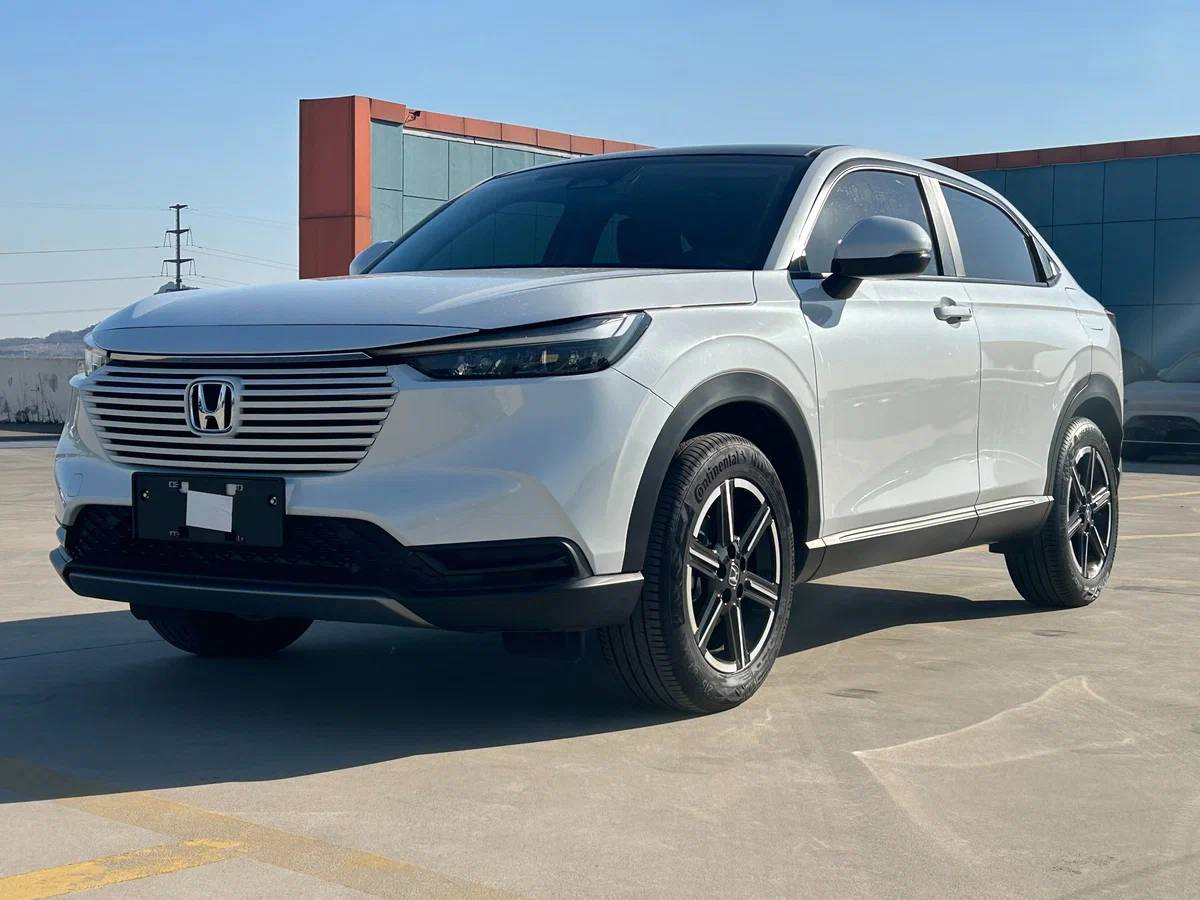
The Honda Vezel remains one of those Japanese crossovers that Russian drivers continue to import themselves. The second-generation models, produced since 2021, are particularly popular: their compact body, fuel-efficient hybrid, good equipment, and traditional Honda reputation make the Vezel an interesting alternative to Chinese crossovers.
But there’s an important caveat: buying a Vezel in Russia isn’t quite the same as buying a mass-produced Haval, Geely, or Chery. The Japanese crossover has its strengths, but there are also features that can turn a relatively profitable purchase into an expensive experiment.

We figure out whether it is worth buying a Honda Vezel in Russia, which engine to choose, how reliable the hybrid is, how much fuel it consumes and what disadvantages owners note .
What is the Honda Vezel
The Honda Vezel is a Japanese compact crossover, which is essentially a relative of the HR-V model. The second generation appeared in 2021 and has become noticeably more modern than its predecessor.
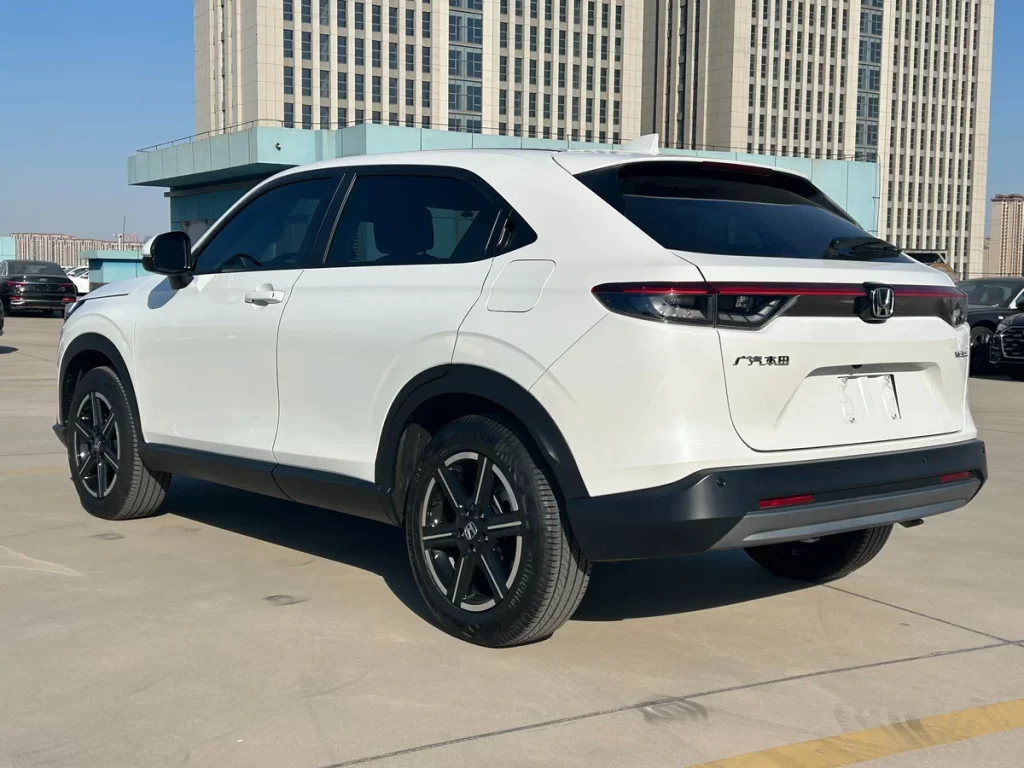
The dimensions of the car remain convenient for the city: the length is about 4.34 m, the width is 1.79 m. Depending on the version, the ground clearance reaches 180-195 mm, and the weight of the car is approximately in the range of 1.25-1.45 tons.
The main feature of the second generation Vezel is its power plants. Petrol versions with a 1.5-liter naturally aspirated engine and e. hybrids are available on the Japanese market.
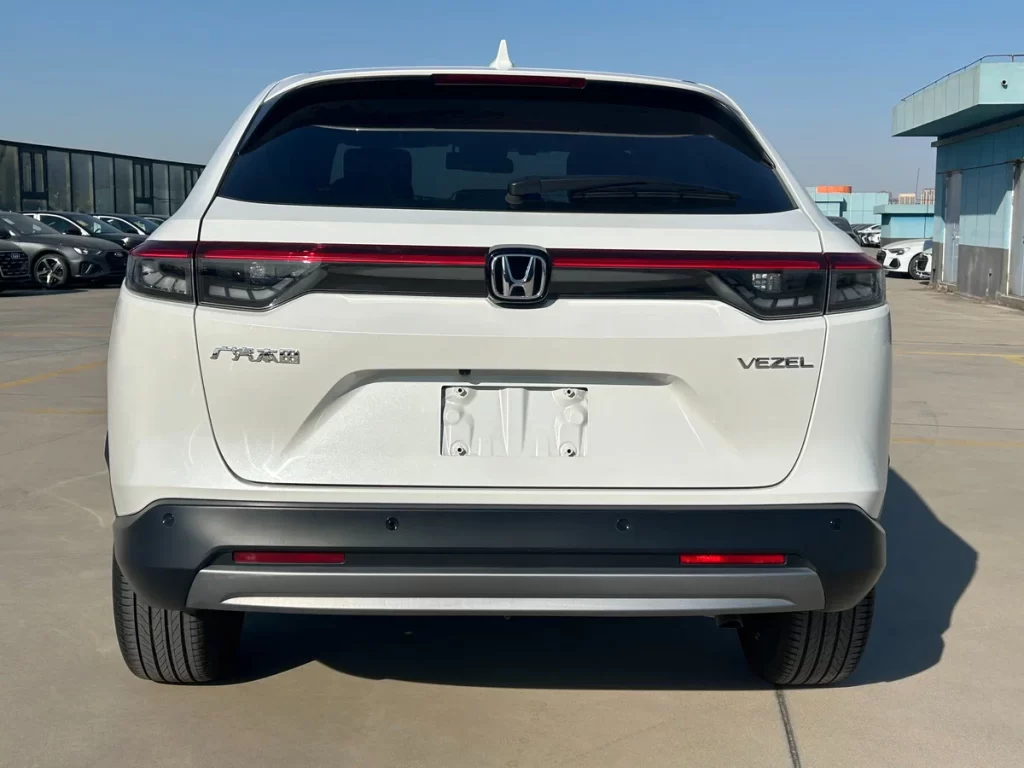
The petrol version has a power of 118 hp, and the hybrid version has an internal combustion engine that develops 106 hp, while the electric motor produces 131 hp. and 253 N m.
It is the hybrid modification that most often attracts Russian buyers.
The main trump card of the Honda Vezel is fuel consumption
If you choose a car solely based on fuel efficiency, the Vezel looks very convincing.
For the hybrid version of the e Z, Honda claims a consumption of up to 25.3 l / 100 km according to the Japanese WLTC cycle for a front-wheel drive car. The all-wheel drive version has a lower figure – about 21.3 l / 100 km.
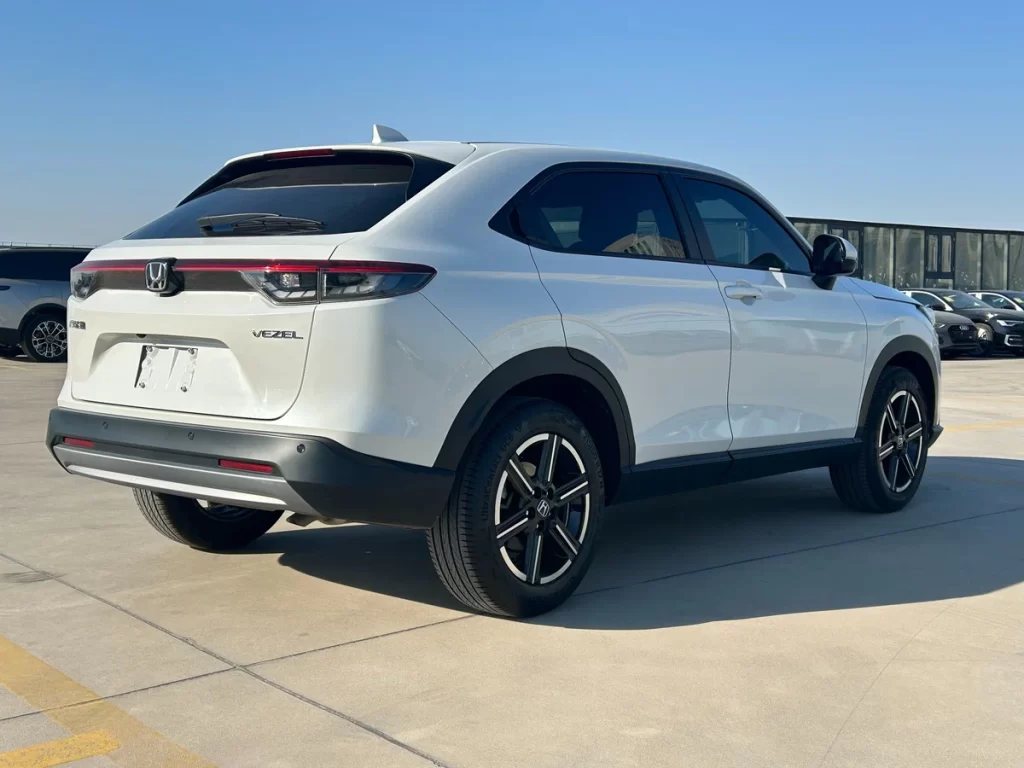
In practice, of course, you should not always expect such figures. Temperature, speed, traffic jams, driving style, and heater operation significantly affect the results.
However, real owners confirm that the Vezel is indeed capable of significantly lower fuel consumption than most gasoline-powered compact crossovers.
For example, the owner of a 2021 Vezel with a hybrid powertrain reports approximately 4.5 l/100 km on the highway and 6 l/100 km in the city. The car has a mileage of 32,000 km.
Other owners also note low fuel consumption as one of the model’s main advantages. In the Vezel review summary, fuel economy and comfort are among the most frequently noted advantages.
This is especially important for Russia: with high annual mileage, fuel savings can partially compensate for the more complex system of the car.
How the Honda Vezel drives
Despite the relatively modest engine characteristics, the hybrid Vezel cannot be called slow.
The electric motor provides an almost instantaneous response to pressing the gas pedal. Therefore, when starting from a traffic light, the car feels more energetic than you might expect from a figure of 106 hp.
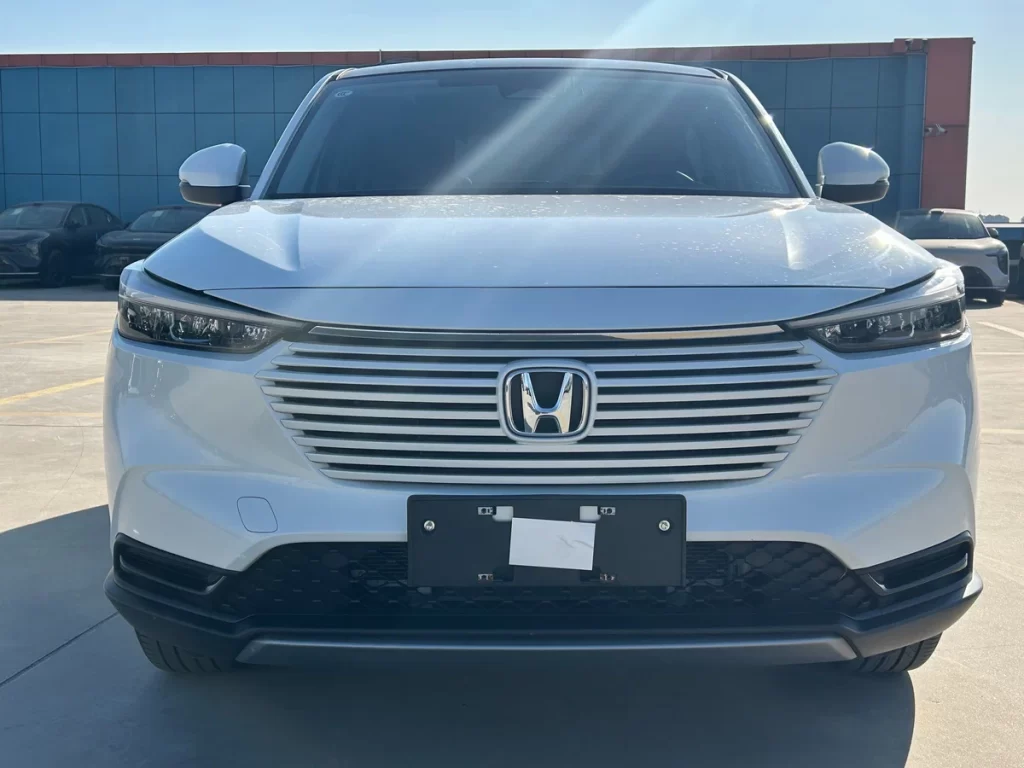
At the same time, the Vezel was not created as a sports crossover.
Its strong point is not acceleration to a hundred, but a combination of:
- smooth movement;
- good response to gas;
- small size;
- low consumption;
- easy handling;
- enough quiet operation of the power plant in the city.
According to owner reviews, it is controllability and dynamics that regularly make it onto the list of the car’s advantages.
What Honda Vezel owners like
If we summarize a large number of reviews from Russian owners, we get a rather interesting picture.
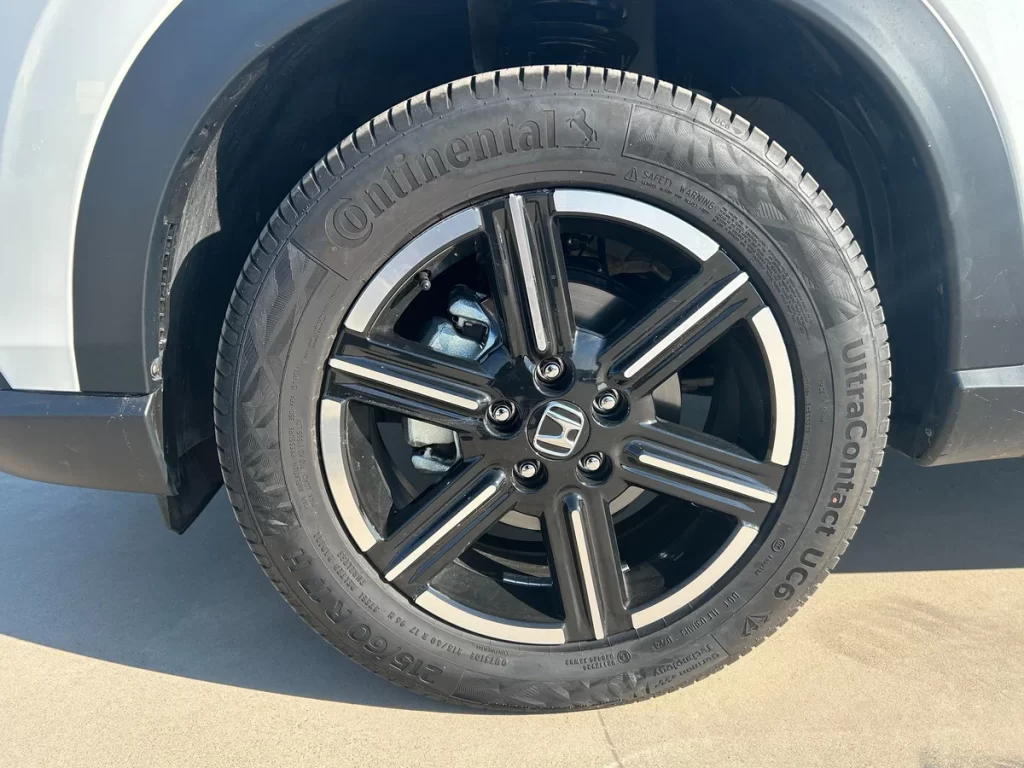
1. Fuel efficiency
This is the main argument in favor of the hybrid Vezel.
When driving quietly, the car is capable of keeping within approximately 5–6 l/100 km, although in winter and at high speed the consumption will be higher.
2. Compact dimensions
The Vezel is well suited for the city. It is easy to park, it does not take up too much space and at the same time does not feel like a small car inside.
Owners separately note the ease of control and good body dimensions.

3. Spacious interior
One of Honda’s advantages is its clever use of interior space.
The second row doesn’t look formal, and the trunk and interior transformation make Vezel quite practical for a family car.

According to owner reviews, the spaciousness of the interior is one of the model’s strengths.
4. Good handling
Vezel doesn’t try to pretend to be an SUV. It is, first and foremost, an urban crossover.
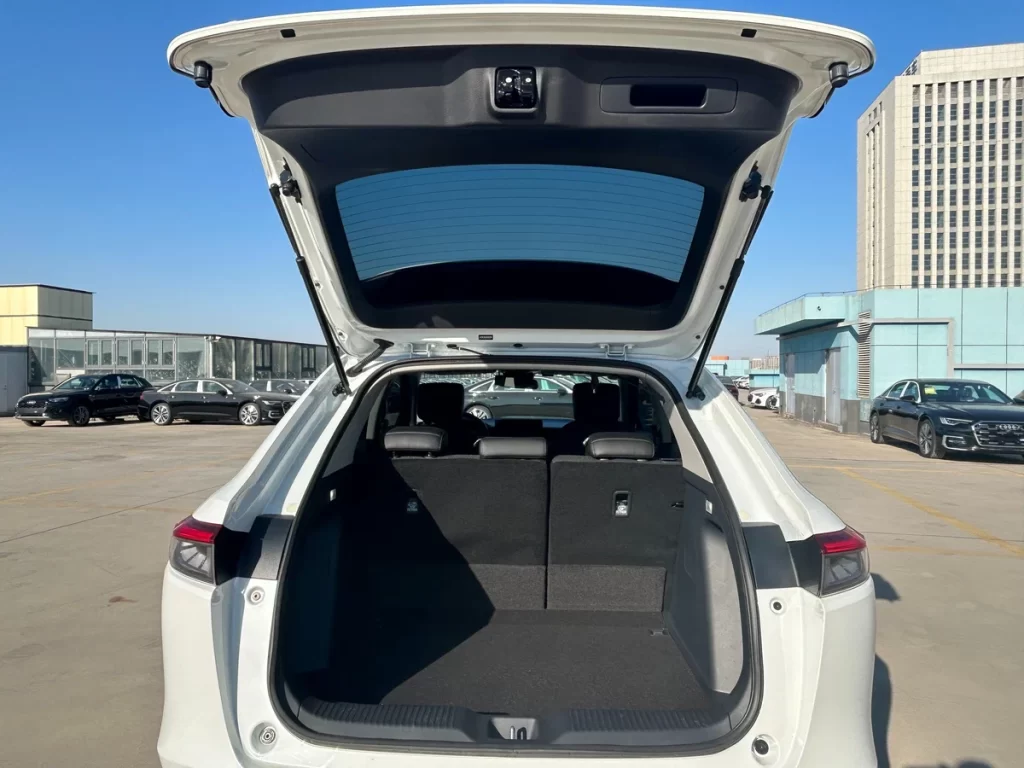
But on the asphalt, it feels confident: the car is easy to control, and the steering remains one of its strong points.
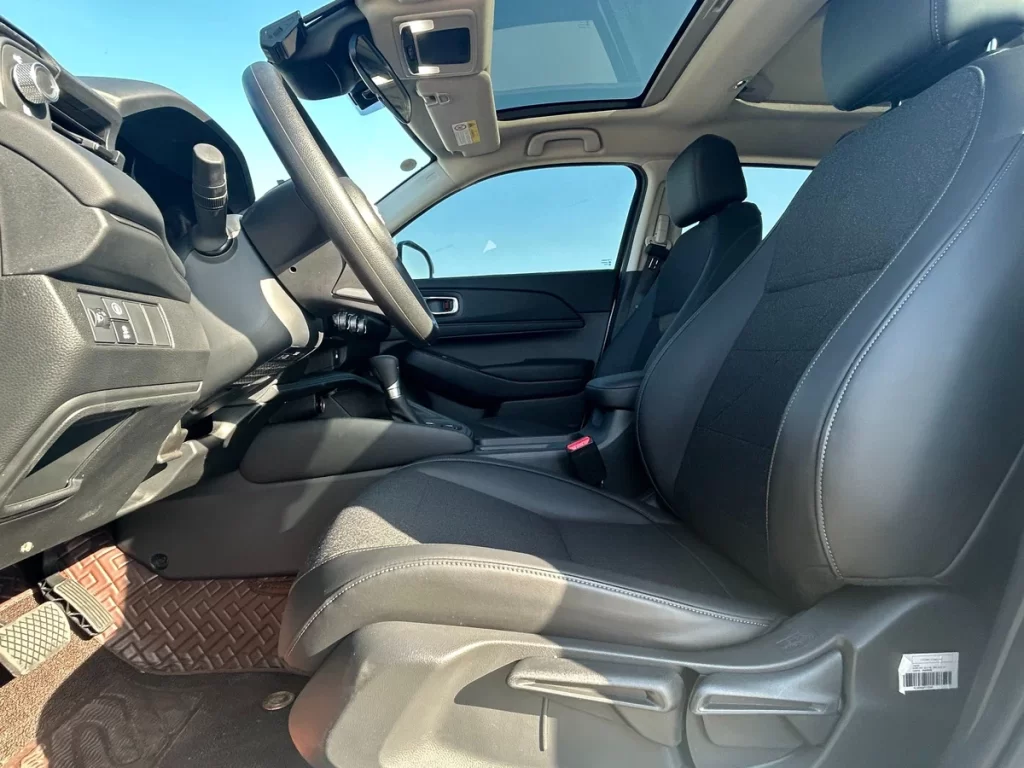 5. Good equipment
The equipment of Japanese cars may differ depending on the version, but quite common configurations offer LED optics, driver assistance systems, heating and other useful functions.
Honda also uses the Honda Sensing complex, which includes modern safety systems.
What are the disadvantages of the Honda Vezel
This is where the most interesting part begins.
The problem with the Vezel in Russia is not so much in the design of the car, but in the specifics of its operation and supply.
Right-hand drive
Most Japanese Vezels that come to Russia are right-hand drive.
For the Far East, this has long been a non-issue. But in the European part of Russia, the attitude towards right-hand drive cars is noticeably more complicated.
Before buying, you should honestly answer yourself this question: are you ready to constantly drive a right-hand drive car?
If not, it is better to immediately look for a left-hand drive option.
Difficulties with multimedia
This is one of the most real drawbacks of Japanese Vezels.
The Japanese multimedia system is designed primarily for the local market. Therefore, some functions may be inconvenient or even useless in Russia.
In recent reviews, owners directly point out problems with standard head units: there are cases when the screen is used mainly for music, and for full Russification, you have to reflash or replace the device.
For a person accustomed to full-fledged Android Auto or Apple CarPlay, this can be a significant drawback.
Poor sound insulation
Vezel cannot be called a poorly insulated car, but you shouldn’t expect miracles.
At high speed, noise from the road and wheels is noticeable. Therefore, after transplanting from a more expensive European or premium car, the level of acoustic comfort may be disappointing.
Stiff suspension 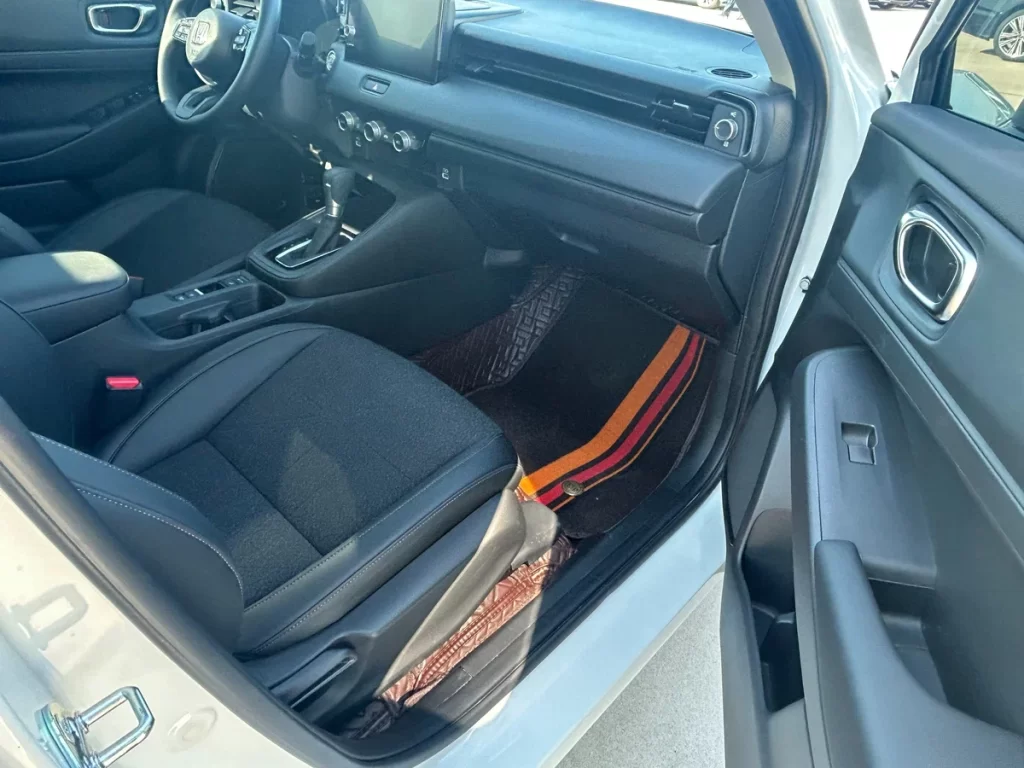
Owners generally praise the handling, but comfort depends on the wheels and the specific version.
On a bumpy road, the Vezel does not turn into a soft sofa. Some owners consider the suspension to be quite stiff.
This is the downside of good handling.
Low ground clearance for real off-roading
Depending on the version, ground clearance is approximately in the range of 170–195 mm.
This is enough for the city and light country roads.
But you shouldn’t buy the Vezel as a replacement for a full-fledged SUV. Especially if the car is driven on poor dirt roads, in deep ruts, or in snow.
What about the reliability of the hybrid?
This is the question that scares many.
A complex hybrid system really does look more terrifying than a conventional naturally aspirated engine and CVT. But the mere presence of an electric motor does not mean the car will necessarily break down.
Honda has extensive experience producing hybrid models, and the second-generation Vezel has been in production since 2021.
According to reviews from 2021–2022 Vezel owners, serious malfunctions are rare. For example, in some reviews, owners directly indicate that there were no breakdowns during operation.
But it is important to understand another thing here.
Vehicle reliability and repair costs are not the same thing.
Even if the hybrid system is generally reliable, repairing specialized components in Russia can potentially be more expensive than servicing a regular gasoline crossover.
Therefore, before purchasing, you need to find out in advance the availability of specialists and spare parts in your region.
Which Honda Vezel is better to buy
If the main goal is minimal fuel consumption, it is more logical to look towards the e .
The hybrid version has good dynamics, low fuel consumption and smooth operation of the power plant.
The gasoline Vezel is conceptually simpler. It has fewer components of the hybrid system, which means that maintenance is potentially easier.
But fuel economy will be noticeably worse.
According to official data from Honda, the gasoline Vezel with a 1.5-liter engine has 118 hp, and the declared consumption for some versions is approximately 15-17 km / l, that is, about 6-7 l / 100 km in terms of the Japanese cycle.
Therefore, the choice can be reduced to simple logic:
Hybrid – if you drive a lot in the city.
Petrol Vezel – if you want the simplest design and are ready to put up with higher consumption.
Is it worth taking all-wheel drive?
All-wheel drive in Vezel is useful primarily in winter.
But this is not Turns the car into a serious SUV.
For a country house, snowy yards, wet ground and uncleaned roads, 4WD will be a big plus.
For exclusively urban use, you can consider a front-wheel drive car. It is lighter and usually more economical.
Honda officially offers both front-wheel drive and all-wheel drive for hybrid versions. However, the weight of a car with 4WD is higher: for example, for the e Z, 1,380 kg is indicated for FF and 1,450 kg for 4WD.
What to check before buying a Honda Vezel
Buying a Vezel based on the principle “Japanese means reliable” is not worth it.
Especially if the car was brought to order.
Before the transaction, you need to check:
1. The history of the car.
2. Auction sheet.
3. Hybrid system.
4. CVT and transmission.
Any extraneous noises, vibrations and jerks should be a reason for additional inspection.
5. Suspension.
There is a good example in the reviews of the owners: one of the buyers, after purchasing Vezel, discovered a small knock, which they could not find for a long time, and in the end the cause turned out to be a silent block.
6. Electronics.
You need to check the multimedia, cameras, driver assistance systems, climate control and all standard functions.
7. Possibility of service in your city.