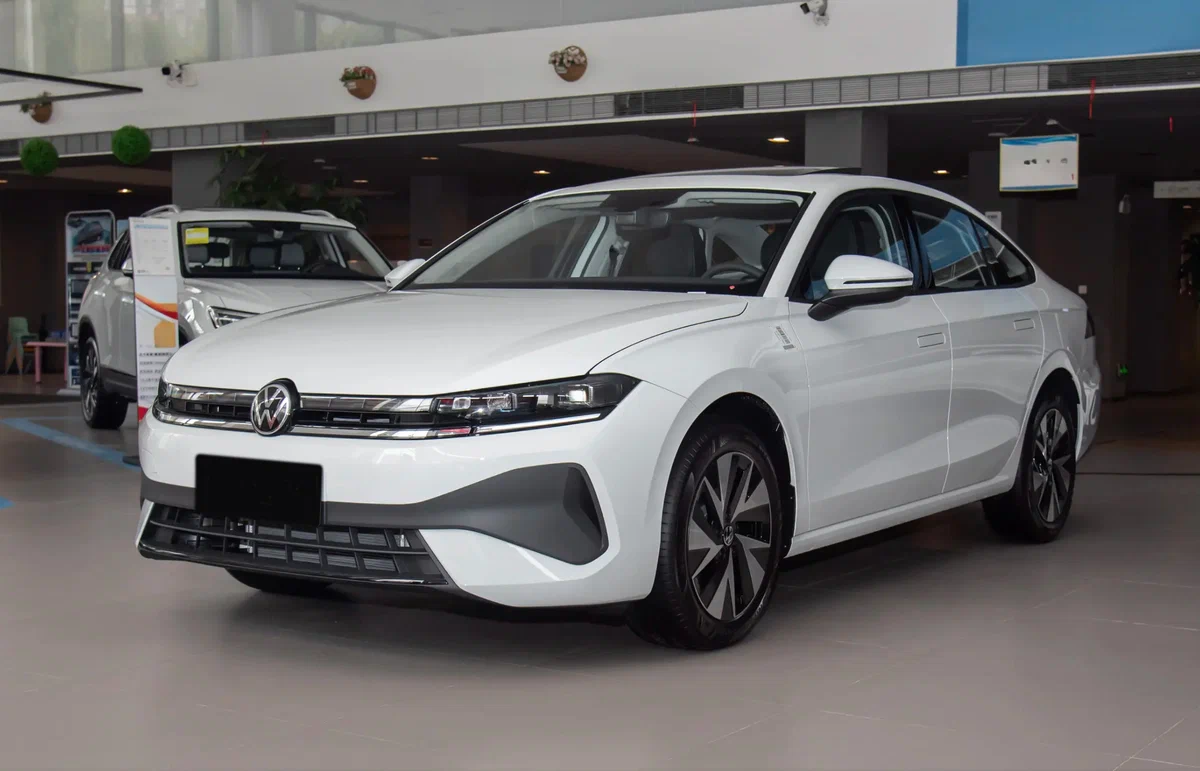
The Volkswagen Sagitar is a C-Class sedan produced for China by the FAW-Volkswagen joint venture. Essentially, it’s a “stretched Jetta,” with a more spacious interior and an emphasis on rear-seat comfort. It comes to Russia only through parallel import, without an official warranty.

The price of such cars in 2025–2026 in the Russian Federation is usually in the range of approximately 2.3–3.2 million rubles depending on the configuration, engine and exchange rate.

Technology and features
The most common versions found in Russia are:
- 1.5 TSI (about 150–160 hp)
- DSG robot (7-speed “Dry” or “wet” depending on the version)

Chassis:
- front McPherson
rear multi-link
In fact, this is a classic modern VW platform with an emphasis on comfort and efficiency.
Advantages of Volkswagen Sagitar

1. Spacious interior
One of the main advantages is the back row. In terms of space, it is closer to the Passat than to the regular Jetta.

2. Good handling
Typical Volkswagen logic:
- well-assembled suspension
- predictable behavior
- stability on the road
- digital instrument panel
- adaptive cruise
- traffic assistants
- cameras and parking sensors
- “dry” boxes can jerk in traffic jams
- expensive clutch repairs are possible
- sensitivity to driving style
- tires can be heard
- wind noise
- the engine becomes noticeable
- a lot of hard plastic
- simplified finishing
- sometimes a “chemical” smell of a new interior
- cut down on assistants
- simpler configurations compared to European VW
- repairs at your own expense
- dependence on gray services
- possible problems with spare parts and waiting
- the 1.5 TSI engine is considered quite reliable with normal maintenance
- the suspension is strong
- electronics are usually stable
- DSG lowers the overall reliability rating
- quality depends on the batch and supplier
- the VW engine and platform are well known services
- consumables are available (oils, filters, brakes)
- there are analogs of parts
- original spare parts are often only available to order
- DSG requires qualified service
- diagnostics are more difficult without official support
- you need a spacious sedan for 2.5-3 million
- you like VW handling
- you are ready for DSG and service nuances
- there is a proven VW/DSG service center
- you want maximum reliability without risks
- an official warranty is important
- you plan to drive only in the city with traffic jams
- you are not ready for a potentially expensive gearbox
- above-average comfort
- an excellent base for the highway
- a spacious interior
- no warranty
- DSG risks
- imperfect sound insulation and finishing
- Basic versions (1.2–1.4 TSI, simple configurations):
👉 from 2.3 to 2.7 million ₽
- Popular versions of 1.5 TSI (150–160 hp, DSG):
👉 from 2.7 to 3.3 million ₽- Well-equipped versions (digital panel, assistants, LED, panorama):
👉 from 3.2 to 3.6 million ₽- Maximum configurations “turnkey” with PTS and customs clearance:
👉 up to 3.7 million ₽ 📌 Examples of real offers:

- about 2.55 million ₽ — basic versions to order
- approximately 2.95–3.1 million ₽ — mass deliveries of 1.5 TSI
- up to 3.5–3.6 million ₽ with PTS and delivery for well-equipped versions
📉 What does this mean for the market
- Sagitar actually competes with:
- Skoda Octavia (parallel import)
- Kia K5
- Toyota Corolla / Levin (Chinese versions)
- In terms of price, it is
in the middle segment C+ / almost D class in terms of cost
🧠 Conclusion on price
Volkswagen Sagitar cannot be called cheap:
- “entry” – about 2.5 million ₽
- normal configuration – closer to 3 million ₽
- rich versions – almost 3.5+ million ₽
👉 Bottom line: this is not a budget VW, but rather an expensive alternative to the Octavia and Corolla, but with a more spacious interior and DSG-risks.
Views: 1 045ufocar - Popular versions of 1.5 TSI (150–160 hp, DSG):

3. Economical and powerful engine
1.5 TSI is quite peppy for the city and highway, while consuming fuel moderately.
4. Rich equipment (in Chinese versions)
Often there is:

Cons and typical problems
1. DSG is the main risk
The most common controversial point:
This is a typical problem of many VW with DSG.

2. Sound insulation is average
At speed:
3. Quality of materials
In Chinese versions:
4. Limited safety/settings for China
Some versions:
5. There is no official warranty in the Russian Federation
This is the key point of parallel import:
Reliability of Volkswagen Sagitar
In general:
But:
Result: average reliability with risks in the gearbox.
Service in Russia
The situation now is:
Pros:
Cons:
Conclusion: it is possible to service, but this is not a “budget Toyota in terms of simplicity”.
Should I buy a Sagitar?
Yes, if:
It is better not to take it if:
The bottom line
Volkswagen Sagitar is a good “semi-premium” sedan in parallel import, which gives:
But you have to pay for this:
👉 In short:
this A smart choice for those who understand that they are buying a VW with its typical features, and not a “problem-free Japanese car.”
💰 Volkswagen Sagitar prices in Russia (parallel import)
In the Russian market in 2025–2026, the Volkswagen Sagitar is sold mainly as an imported “turnkey” car, so the price range is quite wide.