
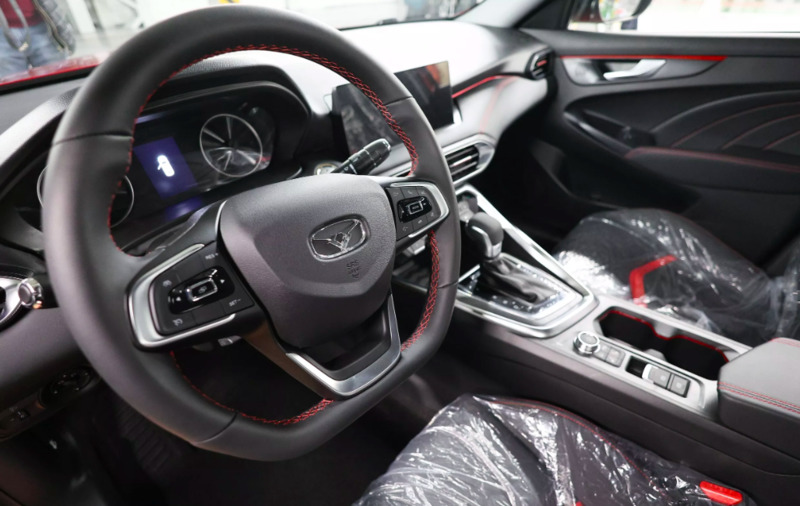
Used Chinese-made cars are now an integral part of the automotive market. Malfunctions of popular Chinese models are in many ways similar to the problems faced by owners of modern Japanese and European cars of a similar class, Alexander Goman, head of the Fit Service Paveletskaya auto repair shop, told Rossiyskaya Gazeta.
Contrary to popular belief, modern Chinese cars do not necessarily break down more often than European or Japanese ones. Many of them are equipped with complex technologies, such as turbocharged engines, robotic gearboxes or continuously variable transmissions, as well as various electronic systems and assistants. Similar components require attention in cars of other manufacturers as well. Russian road conditions, traffic jams, temperature fluctuations, aggressive driving style, and failure to comply with maintenance regulations significantly shorten the service life of any modern equipment.
At 30-50 thousand kilometers, problems with consumables and suspension components most often appear. Due to poor road conditions, stabilizer bar bushings, struts, silent blocks, and wheel bearings may wear out faster than expected. Heavy city traffic can also cause brake pads and discs to wear quickly; in some vehicles, discs begin to vibrate after 30,000-40,000 kilometers. This isn’t a unique problem for Chinese models, but it’s important for owners to promptly address the first signs of wear to avoid costly repairs.
During this period, individual electronic issues may also arise, such as unstable operation of the multimedia system, surround-view cameras, parking sensors, sensors, and air conditioning system. These malfunctions are especially common after severe frosts, sudden temperature changes, or when installing aftermarket equipment. Typically, these aren’t critical failures, but rather the need to update software, check contacts, or replace an individual sensor.
At mileages of approximately 80,000-120,000 kilometers, automatic transmissions, primarily CVTs and robotic gearboxes, become the most expensive component. They provide comfort and efficiency, but do not handle overheating, prolonged slippage, aggressive starts, and operation with old transmission fluid well.
Therefore, when buying a used car, the transmission’s service history may be more important than engine oil change records. Regular transmission fluid changes (every 40,000 kilometers), avoiding overheating, and careful operation ensure a long service life for the transmission. Driving as a taxi, frequent traffic jams, or winter wheel spin increase the risk of costly repairs, regardless of the car brand.
For example, owners of a Chery Tiggo 7 Pro with a CVT should carefully review the service history and pay attention to delays when starting, jerking, humming, or vibration. For the Haval Jolion and F7, equipped with a robotic transmission, proper maintenance and careful handling are essential, especially during city driving with frequent starts. The Geely Coolray may experience occasional electronic and transmission malfunctions.
Modern 1.5-2.0-liter turbocharged engines, when using high-quality oil and fuel and observing maintenance intervals, can last 150,000-200,000 kilometers without major repairs. The main risks are associated with untimely oil changes, the use of unsuitable lubricants, constant high loads, and overheating.
After 80-100 thousand kilometers, the cooling system, thermostat, pump, hoses, and tightness of connections require special monitoring. Any antifreeze leak or unstable engine temperature should be a reason to immediately contact a specialist, the expert emphasized.