
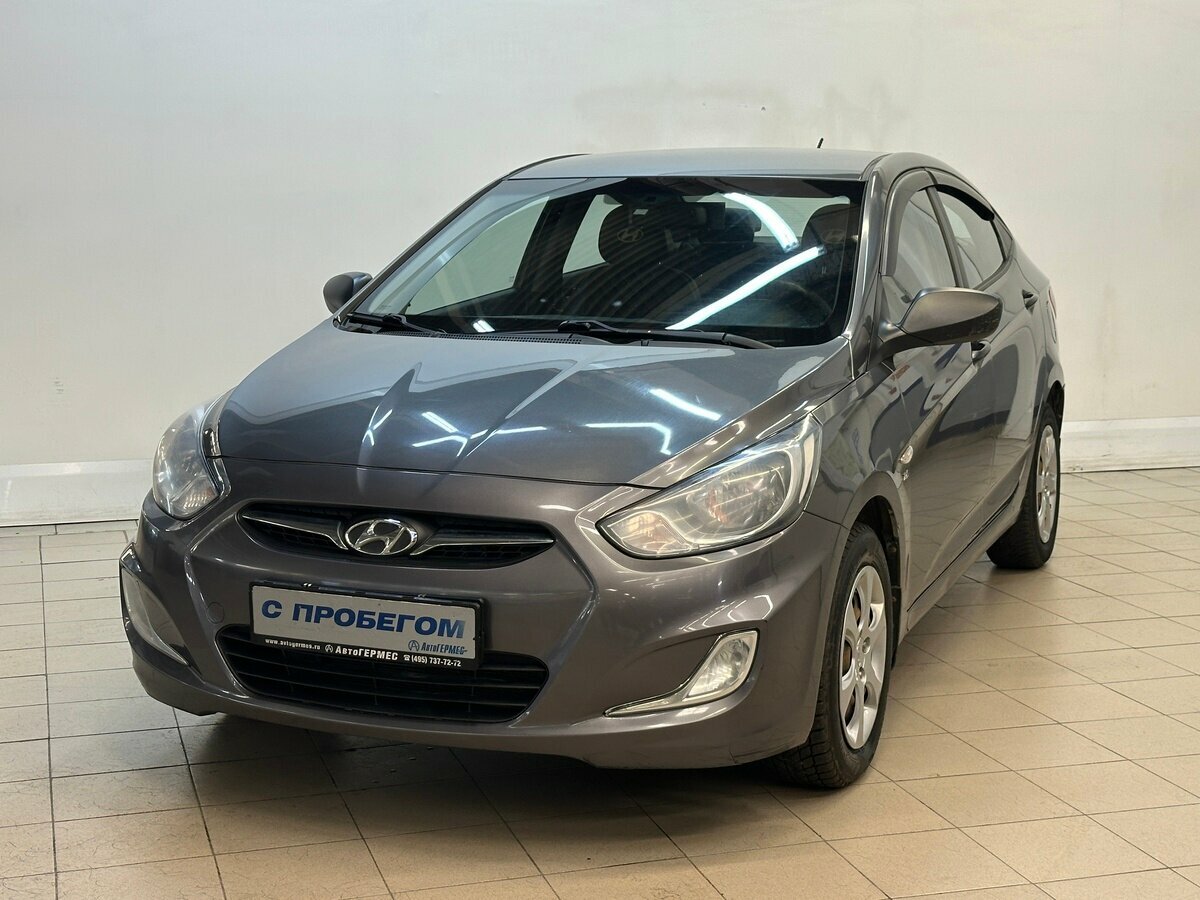
The Hyundai Solaris remains one of the most recognizable cars on the Russian used car market. However, a budget of 1 million rubles in 2026 no longer guarantees low mileage or a recent year of manufacture. For this price, you can find cars from 2014-2016, as well as some second-generation Solaris, and the difference in technical condition between cars with the same price tag can be huge.
According to current ads, Hyundai Solaris for up to 1 million rubles are offered in large quantities. For example, among cars in this budget, you can find cars from 2015-2017 with a mileage of approximately 120-170 thousand km, but there are also examples with a mileage of 200-300 thousand km. Some second-generation cars also fit into the budget, but often have significant mileage.
Therefore, the main question when buying a used Solaris today is not “is it worth buying a Hyundai Solaris for 1 million rubles?”, but “which Solaris for this money is really worth buying?”
What can you buy for 1 million rubles
Prices for Hyundai Solaris now greatly depend on the year, generation, engine, gearbox and body condition.
On the market, for example, you can find Solaris 2015 with a 1.6 engine and automatic for about 900-1 million rubles, and 2016 cars with a similar engine can be found cheaper if the mileage is already approaching 200 thousand km. Dealer ads also include a 2017 Solaris with a 1.6 engine and automatic transmission for approximately 970 thousand rubles.
However, you shouldn’t expect to find an ideal car with low mileage for 1 million rubles.
A case in point: a 2016 Solaris with an automatic transmission, a 1.6 engine with 123 hp and a mileage of over 207 thousand km was listed for 1 million rubles. In another offer, the 2017 Solaris with the same engine and automatic transmission cost about 970 thousand rubles with a mileage of almost 233 thousand km.
That is, a million rubles today is more likely a budget for a good used Solaris, and not for a low-mileage car.
Which generation of Hyundai Solaris is better to choose
First generation Solaris
The first Solaris is valued primarily for its simple design, widespread availability of spare parts and clear maintenance.
In a budget of up to 1 million rubles, you can find cars from 2011-2016. However, it is especially important here not to rely only on the beautiful body and low mileage in the ad.
A car of this age may already require attention:
- engine and attachments;
- automatic transmission;
- suspension components;
- steering;
- air conditioning;
- alternator and starter;
- cooling system;
- body components;
- catalytic converter.
The main problem is age. Even a relatively reliable car after 10-15 years of operation begins to require investment not because of one major breakdown, but because of a combination of minor faults.
Therefore Solaris 2014-2016 with a transparent history and a mileage of about 130-170 thousand km may turn out to be much more profitable than a 2017 car with a mileage of 250 thousand km.
Second generation Solaris: the best option for a million?
The second generation Hyundai Solaris appeared on the Russian market in 2017. It is this model that many buyers consider to be the most interesting option with a budget of around 1 million rubles.
The car has a more modern interior, improved sound insulation, a more spacious body and a noticeably more modern design compared to the early Solaris.
But there is a nuance: a good Solaris II for 1 million rubles is more difficult to find than it seems.
For example, current ads show 2017 cars with a 1.6 engine and an automatic transmission for approximately 970 thousand rubles, but the mileage of such a copy exceeds 230 thousand km.
If the seller offers a Solaris II with low mileage for significantly less money than similar cars on the market, this is a reason not to rejoice at the discount, but to carefully check the history of the car.
Which engine to choose – 1.4 or 1.6
For a used Hyundai Solaris, the most rational choice Many buyers consider the 1.6 engine.
Its advantage lies not only in power. For a car weighing approximately 1.2 tons, the 1.6 version’s traction reserve is noticeably more comfortable, especially when overtaking on the highway, fully loaded, and using the air conditioning.
In early Solaris models, the 1.4 engine produces approximately 107 hp, while the 1.6 produces approximately 123 hp. The second generation also used naturally aspirated gasoline engines of these displacements.
However, it’s not worth buying a car just for the 1.6 engine. The condition of a specific car is more important than the difference between 1.4 and 1.6.
It is better to buy a well-maintained Solaris 1.4 with confirmed service than a 1.6 after heavy use and with a lot of deferred repairs.
What is more reliable – mechanics or automatic
A manual transmission usually becomes the most rational choice for a buyer who wants to minimize potential costs.
But an automatic transmission makes Solaris much more convenient in the city and in itself is not a reason to refuse to buy.
The main thing is to check its condition.
During a test drive there should not be:
- strong shocks when engaging D or R;
- long pauses before engaging transmission;
- pronounced jerks;
- slippage;
- extraneous hum;
- noticeable vibrations;
- deterioration of gearbox performance after warming up.
Particular care should be taken with cars that have been used as taxis. Externally, such a Solaris may look quite decent after a cosmetic repair, but intensive city use means a completely different load on the engine, automatic transmission, suspension and braking system.
The main danger of a Solaris for 1 million rubles is not the engine
Buyers of used cars are often most afraid of problems with the engine or gearbox. However, when choosing an old Solaris, it is much more dangerous to buy a car after a serious accident, a taxi or with an altered mileage.
For 1 million rubles, it is especially important to check:
Body. You need to measure the thickness of the paintwork, inspect the gaps, fasteners, side members and repair areas.
Mileage. The numbers on the dashboard alone are not enough. It is necessary to compare them with the service history, repair records, the condition of the interior, steering wheel, pedals and driver’s seat.
Owner history. A large number of owners over a short period may be a reason for additional inspection.
Use in a taxi. This is especially relevant for Solaris. Such cars could travel several hundred kilometers daily, after which they were brought into marketable condition before sale.
Legal history. Before purchasing, it is necessary to check restrictions, liens, accidents and other information in available databases.
What mileage is considered normal
For Solaris aged 8-12 years, a mileage of about 150-200 thousand km is not a death sentence in itself.
Much more important is how the car was serviced during these kilometers .
A car with a mileage of 180 thousand km and regular changes of oil, filters, spark plugs, technical fluids and consumables can be much more reliable than a copy with a declared 100 thousand km, which was serviced only before sale.
Therefore, with a budget of 1 million rubles, it is better to refuse ideas to find the “perfect Solaris with 80 thousand km mileage”.
A realistic strategy is to look for a car with an honest history and a clear technical condition.
How much money to leave after the purchase
One of the biggest mistakes is to spend your entire budget on a car.
If you have exactly 1 million rubles on hand, you shouldn’t buy a Solaris for 1 million without a financial reserve.
Even after diagnostics, you may need to replace:
- oil and filters;
- spark plugs;
- brake discs and pads;
- suspension components;
- tires;
- technical fluids.
- battery;
An older car may also unexpectedly have more serious expenses.
Therefore, it is wiser to consider the budget something like this: 900-950 thousand rubles for the car itself and another 50-100 thousand rubles to leave for initial maintenance and unforeseen expenses.
If the car is really good, spending a little more on a quality example is often more profitable than buying the cheapest Solaris and then gradually bringing it to normal condition.
What are the disadvantages of the Hyundai Solaris
The model also has objective disadvantages.
Firstly, Solaris is quite stiff on a bad road. Secondly, sound insulation cannot be called the car’s strong point. Thirdly, older cars have problems with the body and individual interior elements.
Another point is that the high popularity of the model is both an advantage and a disadvantage.
There are a lot of spare parts, the car is well known to service centers, but the used Solaris market is also filled with cars after taxi, corporate use and major repairs.
Therefore you should not choose Solaris based on the principle “the model is reliable – then you can take any” .
What to check before buying
Before handing over money, it is advisable to conduct a full diagnostics.
The minimum list looks like this:
- Check the VIN and history of the car.
- Compare the actual mileage with the service history.
- Inspect the body with a thickness gauge.
- Check the power elements of the body.
- Run a computer diagnostics.
- Check the engine on a cold start.
- Evaluate the operation of the automatic transmission after complete warm-up.
- Check the suspension and steering.
- Inspect the underbody and subframes.
- Check the air conditioning and all electrics.
- Check the condition of the tires and brakes.
- Run a full test drive.
If the seller is categorically against diagnostics at an independent service, it is better to refuse the deal.
Is it worth buying a Hyundai Solaris for 1 million rubles
Yes, buying a used Hyundai Solaris for 1 million rubles in 2026 makes sense – but only if you choose the right specific example.
For this money, the model remains interesting due to its prevalence, understandable design, availability of spare parts and a large number of services familiar with the car.
But a million rubles no longer means that the buyer automatically gets a new and low-mileage Solaris. The market simultaneously offers cars from 2014–2016 with relatively low mileage, older cars with higher mileage, and some Solaris IIs that fit within the budget primarily due to their high mileage.
The optimal option is a Solaris with a 1.6 engine, a clear history, a working automatic or manual transmission, no major body repairs, and confirmed maintenance.
And the main rule here is simple: it’s better to buy an older Solaris in really good condition than a newer car with an unknown past.
If the seller is asking around 1 million rubles for a Solaris with 200,000–250,000 km on the clock, major body repairs, or a murky history, it’s definitely not worth overpaying just for the model name. There are enough offers on the market to calmly wait for a truly live specimen.