
The Russian used car market could face significant changes. Dealers are proposing to transform the electronic vehicle title into a full-fledged digital vehicle history , which will reflect virtually the entire life cycle of the car—from production to disposal.
The initiative was discussed at a roundtable discussion at the Civic Chamber of the Russian Federation. Its main goal is to reduce the number of fraudulent schemes in car sales and give buyers the opportunity to identify the real problems of the car in advance.
Today, when buying a used car, a person must gather information from several sources. Registration restrictions, accident history, mileage, collateral, maintenance, and the car’s origin are checked separately. However, some data may be missing.
The new system should combine this information into a single digital vehicle profile.
Every third car may have a rolled-back mileage
The problem with the secondary market is not only the high cost of cars. The lack of reliable information about the car’s history poses a significant danger to the buyer.
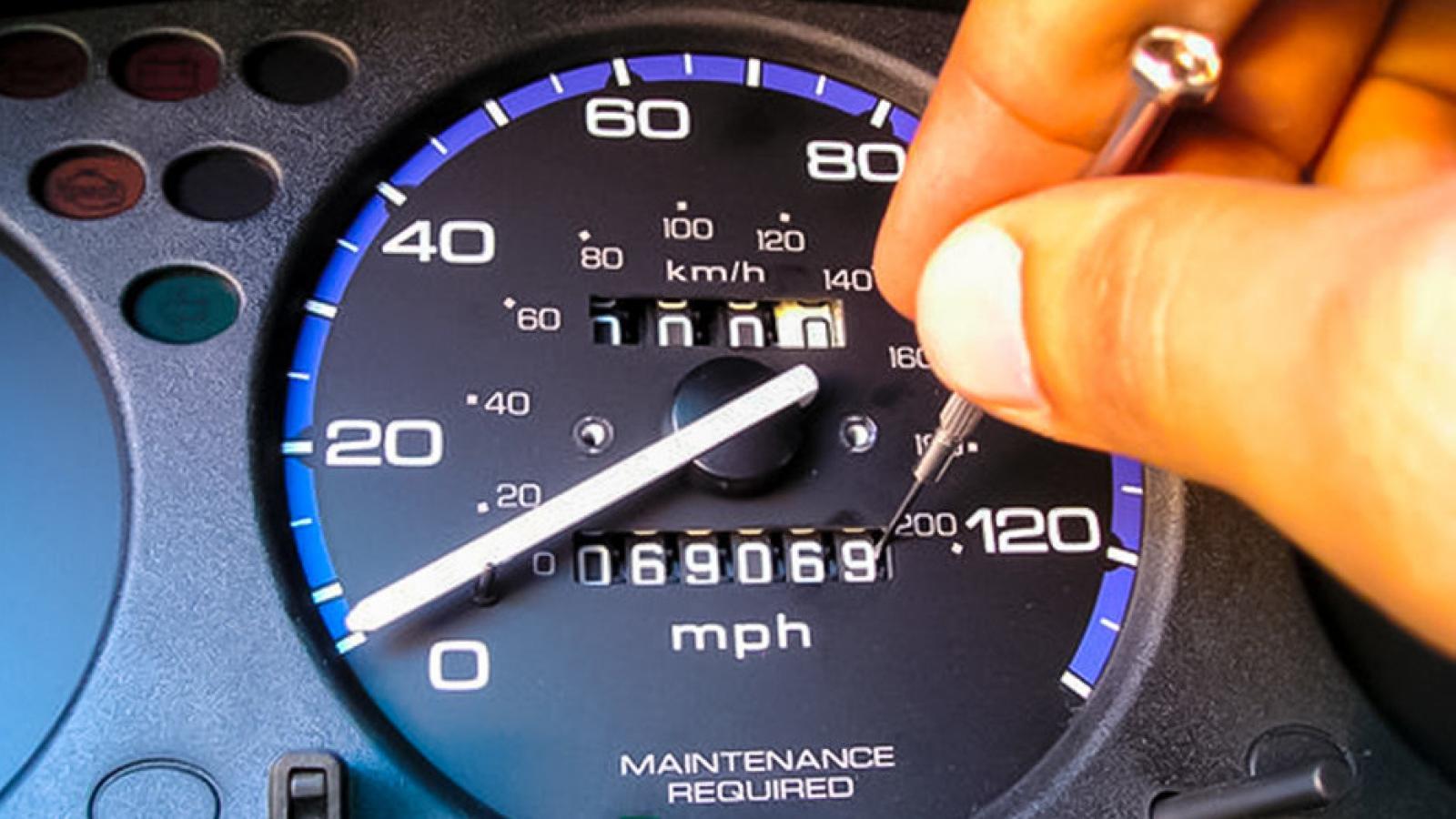
According to the Association of Russian Automobile Dealers (ROAD), about 30% of cars on the secondary market may have a rolled-back mileage. Another 35% of sellers, according to the organization’s estimates, fail to inform buyers about accidents or technical faults.
As a result, people choose a car based on relatively low mileage and good external condition, only to discover costly consequences of previous use after the purchase.
ROAD estimates the total damage to buyers from such schemes at more than 635 billion rubles per year.
Digital history has the potential to change the very principle of car valuation. Instead of a single digit on the odometer, the buyer will be able to see a sequence of readings over several years.
For example, if a car was serviced at a service center with a mileage of 170,000 km, but before the sale the dashboard shows 105,000 km, the discrepancy will be obvious.
What is proposed to be added to the EPTS
Currently, the electronic passport is already an important element of vehicle registration. However, representatives of the dealer community believe that its functionality needs to be expanded.
The digital history is proposed to record:
- odometer readings at each visit to the service center;
- technical work and repairs performed;
- information about accidents;
- the nature and extent of damage;
- information about sales contracts;
- history of changes in the value of the car;
- liens and arrests;
- prohibitions on registration actions;
- the presence of the car in wanted;
- dates of introduction and lifting of restrictions;
- information on the final disposal of the vehicle.
In essence, the EPTS can turn from an electronic passport into a single digital archive of the car.
Moreover, such a system should work not only for Russian-made cars. For imported cars, it will be necessary to transfer to it the most complete available history of operation up to the moment of import to Russia.
Why is this especially important for the secondary market
A used car can have several owners, and each of them knows only part of its history.
Representatives of the ROAD note that during its operation, a car in Russia usually manages to change several owners. Moreover, even the dealer is not always able to restore the full history of the car.
As a result, a paradox arises: a new owner can buy a car whose problems even the seller is unaware of.
A particularly unpleasant situation arises with legal restrictions.
According to ROAD, about 5% of cars on the secondary market have various encumbrances – for example, they are pledged, under arrest, or have other restrictions.
For the buyer, this can result in serious financial problems. The car may appear to be in perfect working order, but legally the transaction will be much more complicated than it seems.
Therefore, the technical history and legal purity should be considered as two parts of a single check.
The electronic PTS has already changed the market, but this was not enough
Electronic PTS began to be used instead of paper documents in 2020. According to Electronic Passport JSC, approximately 15 million electronic passports have been issued to date.
The system already has an important advantage: it allows the state and market participants to control a significant amount of information about vehicles.
In particular, the electronic passport helps combat certain vehicle import schemes, including so-called cut-up and modular schemes. In addition, the digital document increases the transparency of certification procedures, customs clearance and calculation of the recycling fee.
The next logical step is to add information not only about the origin of the car, but also about its subsequent use.
That is why the ROAD initiative does not look like the creation of a completely new system, but rather like expanding the capabilities of an already existing digital infrastructure .
A car will be assessed not by a single digit on the odometer
One of the most noticeable consequences of the reform may be a change in buyers’ attitudes towards mileage.
Today, the difference between a car with a mileage of 90,000 and 190,000 km can be hundreds of thousands of rubles. Therefore, there is an economic incentive to change the odometer reading before selling it.
If all mileage information is accumulated automatically, the value of the number on the dashboard will decrease.
The buyer will be more interested in how the car has been used throughout its life, rather than what the odometer shows today.
This is especially true for cars that have been used as taxis, car sharing, delivery services, or commercial vehicles. In such cases, the low stated mileage does not always correspond to the actual intensity of use.
Accidents will also become more difficult to hide.
Another potentially important function is recording accidents with a description of the damage.
Today, after a high-quality repair, a car can look practically like new. But the consequences of a serious accident can become apparent months or years later.
This could include damage to the body geometry, electrical problems, safety systems, and corrosion of restored components.
If information about a serious accident is stored in a digital history, it will be more difficult for the seller to present a restored car as an “accident-free” car.
It is especially important not only to note the fact of the accident, but also to indicate the nature of the damage and the work performed.
The data will be useful not only for buyers
A complete digital history has another important effect – the state will receive a more accurate picture of the Russian vehicle fleet.
Today, it is difficult to get an absolutely accurate picture of the age, mileage, and actual condition of all cars in the country.
If such information is collected automatically, it will become easier to determine which segments of the vehicle fleet are aging the fastest and where it is needed Update.
This may also be useful for planning the fuel market, road infrastructure, and charging station network.
For example, data on the number of electric and hybrid vehicles will allow for a more accurate assessment of the need for charging infrastructure, while information on commercial vehicles will help understand the load on the fuel network.
An old vehicle fleet makes the issue particularly relevant
The issue of vehicle technical condition is closely related to their age.
According to data presented at the roundtable, vehicles older than 15 years make up approximately 40% of the Russian vehicle fleet.
Age in itself does not mean a vehicle is dangerous. A well-maintained car can be used for decades. However, the technical condition of an older vehicle requires more careful monitoring.
Therefore, a digital history may become an additional tool for risk assessment. The state will be able to better understand which vehicles continue to be used despite their significant age and intensive use.
Insurers may also receive a new tool
Information about the actual mileage and condition of a vehicle is also of interest to insurance companies.
The Russian Union of Auto Insurers believes that such information can potentially be used in determining the cost of compulsory motor vehicle liability insurance (OSAGO) and comprehensive motor insurance (CASCO).
In the future, insurers will be able to evaluate not only the model, age, and region of use of a vehicle, but also its confirmed history.
For owners, a transparent history can be an advantage. A car with documented maintenance and reliable mileage is easier to evaluate than a car about which the only known information is what is stated in the ad.
But a digital passport will not replace diagnostics
The initiative has an obvious limitation: even the most detailed electronic history cannot completely replace a pre-purchase car inspection.
If a malfunction has never been recorded at a service center, it simply will not be in the digital profile.
Therefore, the buyer will still need to inspect the body, diagnose the engine and gearbox, check the suspension, electronics and safety systems.
In other words, a digital history should become the first filter , and not the only way to inspect a car.
The main question is who will enter the data
For the system to work effectively, simply expanding the EPTS is not enough.
It is necessary to ensure a regular flow of information from service centers, insurance companies, dealers, and government agencies. Furthermore, the issue of liability for erroneous or intentionally distorted information must be resolved.
If some services transmit data while others do not, the vehicle’s history will again be incomplete.
The situation is even more complex for used foreign cars that have already been driven outside of Russia. They will need to obtain information from foreign sources, otherwise the digital profile will actually begin from the moment the car is imported into the Russian Federation.
What will the buyer ultimately receive
If the project is fully implemented, it will be possible to get a much more objective picture before purchasing a car.
A potential owner will be able to check:
mileage → maintenance → accidents → repairs → legal restrictions → change of ownership → the subsequent fate of the car.
This will seriously change the used car market.
It will become more difficult for sellers to make money by concealing problems, and cars with a transparent history will receive an additional advantage when selling.
However, the idea itself does not guarantee the disappearance of fraud. There will always be cars with incomplete histories, unofficial repairs, and data that cannot be confirmed.
However, the more information available to the buyer, the less room there will be for manipulation.
Conclusion
Creating a complete digital vehicle history could become one of the most significant stages in the development of the Russian used car market.
The main value of such a system lies not in the electronic PTS itself, but in combining disparate data into a single vehicle history.
For the buyer, this means fewer unpleasant surprises after the transaction. For dealers, it means a more transparent market and the ability to document the car’s condition. For insurers, it means a more accurate risk assessment. For the government, it means detailed statistics on the Russian vehicle fleet.
But the end result will depend on how complete the database turns out to be. If only part of the information gets into the digital history, the buyer will still have to check the car themselves.
If the system really does record key events throughout the car’s life cycle, the usual “looked at the ad – checked the documents – went for diagnostics” scheme can be supplemented by one more important step: checking the digital biography of the car .