
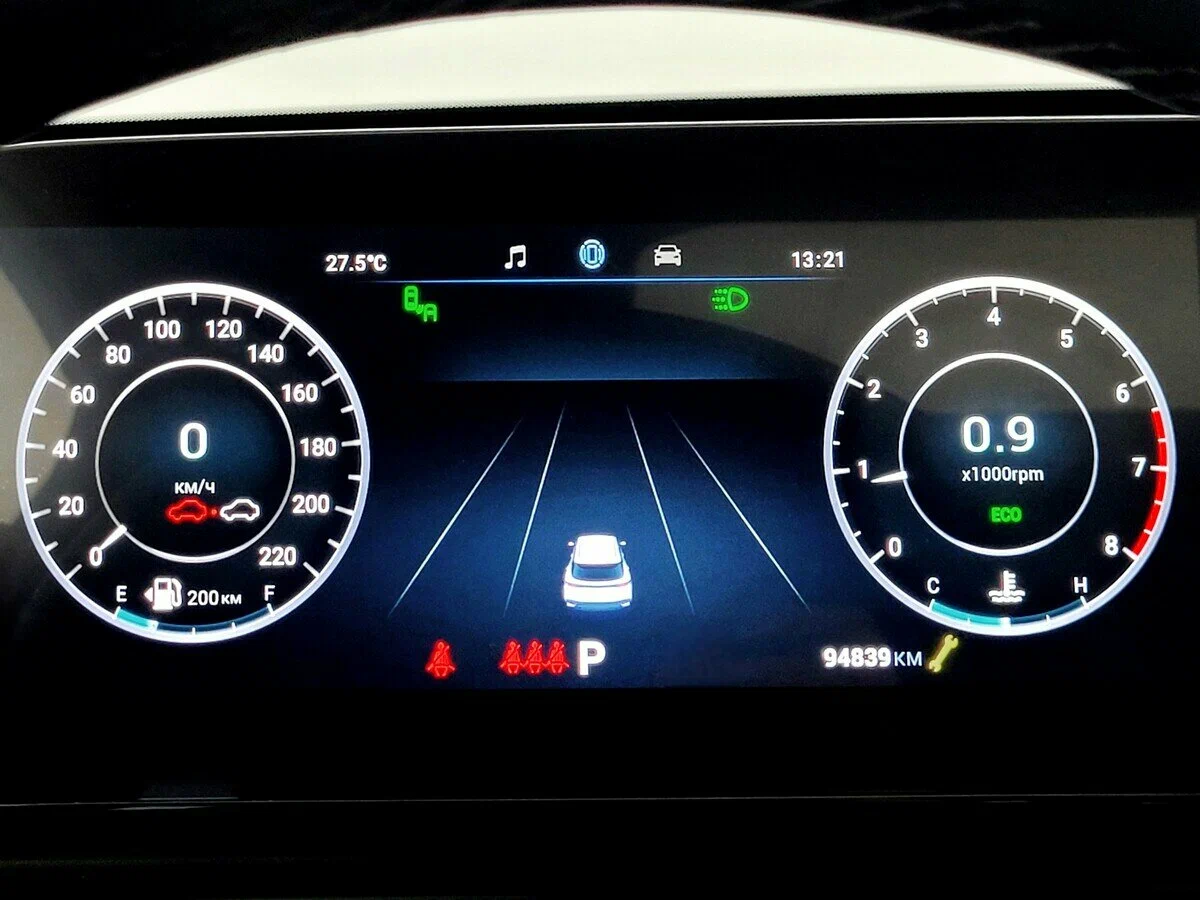
Driving at low revs, familiar to many drivers, sometimes places a greater strain on the engine than running at 4,000 rpm, notes Nikita Arkhipov, head of service at Rolf Group, in an interview with Rossiyskaya Gazeta.
Engine operation includes thousands of piston movements, ring contact with cylinder walls, crankshaft rotation in its bearings, and valve timing. The higher the revs, the more intense these processes are. The common belief that high revs accelerate wear is true, but incomplete. It ignores the fact that low revs are not always optimal. Load plays a significant role, that is, the degree to which the accelerator pedal is depressed and, as a result, the pressure in the cylinders.
In some modern turbocharged gasoline engines, the combination of low revs and high load can cause premature ignition of the fuel mixture. This is one of the least desirable scenarios for an engine.
The practical takeaway is simple: if the engine is running at 1,300-1,500 rpm and acceleration requires heavy pressure on the gas pedal, it is better to shift to a lower gear. The rpm will increase (for example, to 2,000-2,500), but the engine operating conditions will become less stressful.
For most gasoline engines, the optimal range of quiet driving after warming up is 1,800-3,000 rpm. For diesel engines, this zone is usually lower – around 1,500-2,500 rpm.
These figures are guidelines, not strict rules. Modern turbo engines, powerful naturally aspirated V8s, and compact high-revving engines have different characteristics. Therefore, it is important to follow the operating instructions and the specific engine specifications.
It should also be noted that periodically revving a properly functioning, warmed-up gasoline engine to 3,500-4,500 rpm is normal. When overtaking, accelerating hard, or climbing hills, this is often preferable to running the engine in high gear at 1,200 rpm. The engine is designed to operate across the entire permissible tachometer range.
The situation is different with a cold engine. After starting, time is needed for the oil to reach all rubbing parts and the engine to warm up. Oil viscosity depends on temperature, which affects its ability to provide protection.
Important detail: the coolant temperature gauge may show a normal value, while the engine oil is still significantly colder. Therefore, in winter, the first 10-20 minutes after starting should not be considered full permission to use maximum power.
Extended idling is also undesirable. Although the mechanical load is low, the engine continues to accumulate engine hours. Fuel combustion conditions may be suboptimal, which is especially true for diesel and direct-injection engines. This can lead to deposits, oil dilution with fuel, and problems with the exhaust system.
Therefore, a car driven primarily in city traffic may have greater actual engine wear than a car with the same mileage on the highway. Mileage and wear are not the same thing.
Temperature conditions also affect service life. After intensive driving, hill climbs, or vigorous driving, the turbocharger and oil can become very hot. Modern cooling systems often cope with this on their own, but after a high load, it is useful to finish the trip in a calm mode.
Studies of engine durability confirm that service life depends not only on speed. For crankshaft bearings, maintaining a stable oil wedge is critical. For the cylinder-piston group, pressure, temperature, lubrication quality and load mode are important, the expert emphasizes.