

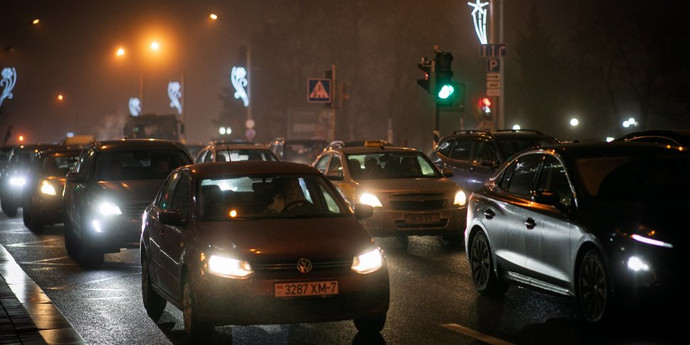
The topic of street lighting was discussed today during a meeting between Alexander Lukashenko and the leadership of the Council of Ministers. The head of state ordered another analysis of the system’s operation and, if necessary, fine-tuning it to take into account the changing length of daylight hours.
Lukashenko drew attention to the irrational use of electricity several days ago. Then he criticized local authorities, noting that street lighting was turned off too late in the morning and turned on too early in the evening—when it was already light enough outside. Following this, the Ministry of Energy began adjusting the operating modes of street lighting, which prompted complaints and questions from the population.
Returning to the topic today, the head of state ordered further adjustments to the system’s operation. He also emphasized that reducing the operating time of streetlights by even 10-15 minutes yields significant savings nationwide, comparable, for example, to the cost of constructing individual agricultural facilities or additional expenditure on increasing pensions.
“These 10-15 minutes over the course of a year provide the cost of three dairy farms and seven calf sanatoriums, as they say now. But most importantly: from February 1 (I signed a decree) — an increase in pensions. Not much, by 10%, but pensions have been increased under these conditions for pensioners. If you take these savings over a year, it’s practically this increase” , Lukashenko noted.
The head of state also touched on the topic of the Belarusian Nuclear Power Plant and the cost of the electricity generated there. According to him, operating the station, servicing it, and replacing the fuel require significant expenditure.
“One refill of fuel costs $150 million, as the builders reported to me earlier. Now, it’s probably $200 million. We’ve been constantly, for five years, extracting uranium rods from the reactor in portions and inserting new ones. This is a considerable amount of money. Everything costs money. Therefore, if we’re ready to pay, we can continue to operate it now,” , Lukashenko said.