
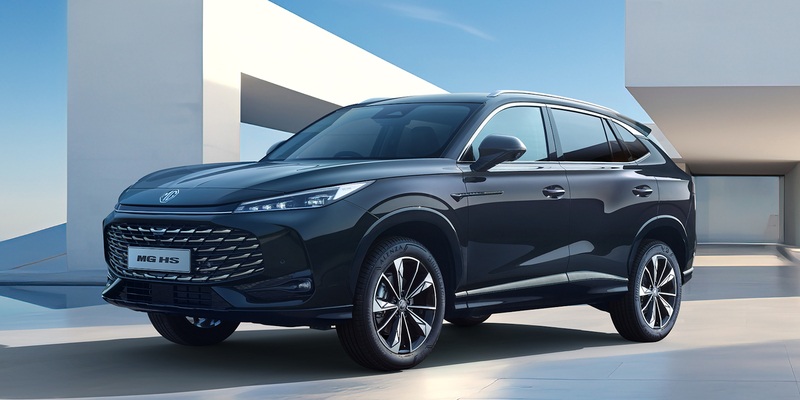
The Chinese automobile market in Russia continues to change. While some brands are increasing sales, expanding dealer networks, and introducing new models, others are gradually losing ground. MG could be one of these brands: as of July 2026, only two new cars of this brand were registered in Russia.
Both cars turned out to be MG 6 liftbacks. These data are cited by Avtostat Info.
At first glance, this figure looks especially alarming when compared with the official model lineup. Formally, the MG brand offers several cars in different classes in Russia—from sedans and liftbacks to crossovers, SUVs, and an electric roadster. However, a wide catalog in itself does not necessarily mean high demand.
Only two registrations in a month: what’s happening with MG in Russia
Registration of only two new cars in a whole month is an extremely modest result for a brand that claims to have a full presence on the Russian market.
At the same time, according to available information, MG’s official Russian website lists about 65 cars in stock. But new cars of the brand are practically non-existent on popular automobile classifieds.
This situation may indicate several problems at once.
Firstly, MG’s dealer network in Russia remains significantly less visible than that of its largest Chinese competitors. Buyers choosing a new car today pay attention not only to price and specifications, but also to the availability of dealers, service centers, and spare parts.
Secondly, competition in the Chinese car segment has become much fiercer. The Russian market is already effectively divided between major players that are actively investing in advertising, local assembly, credit programs, and the development of dealer networks.
Under such conditions, it is becoming increasingly difficult for small brands to retain the attention of buyers.
Why MG is losing to the competition
MG has a fairly wide product lineup. The brand produces sedans, liftbacks, crossovers, SUVs, and electric vehicles. Historically, MG is a British brand, but today the brand belongs to the Chinese auto giant SAIC Motor.
In Russia, MG cars find themselves in a difficult situation. On the one hand, the brand offers a fairly diverse model range. On the other, its recognition among Russian buyers is noticeably inferior to such mass-market Chinese brands as Haval, Chery, Geely, and other major market players.
For buyers of a new car, the question of further operation becomes one of the key ones. Even an attractive price isn’t always enough to offset concerns about the availability of spare parts, warranty coverage, and the car’s resale value.
That’s why small Chinese brands are facing a serious problem: the Russian market is gradually ceasing to be a place where they can successfully sell a car solely due to their status as a “new Chinese brand.”
MG’s departure from Russia hasn’t yet been confirmed
Despite the extremely low July figures, it’s too early to say that MG is finally leaving the Russian market.
The brand’s Russian representative office hasn’t officially announced its departure or commented on the sales situation. The small number of registrations may be due to a temporary restructuring of deliveries, a reduction in inventory, or preparations for a change in the model lineup.
Another scenario cannot be ruled out: the brand may be revising its strategy for operating in Russia. In today’s automotive market, companies are increasingly abandoning a broad but ineffective presence and concentrating on a few of the most promising models.
However, if the registration situation persists in the coming months, the question of MG’s continued presence in Russia will become significantly more pressing.
The Russian market for Chinese cars is undergoing natural selection.
The story of MG may become yet another example of a larger process currently taking place in the Russian automotive market.
Following the massive arrival of Chinese manufacturers, the number of brands represented has grown dramatically. However, consumer demand is not endless. As a result, the market is gradually beginning to split into several groups.
The first are large brands with a developed dealer network, high sales levels, and stable deliveries.
The second are brands that are trying to gain a foothold and are looking for their own niche.
And the third are brands with minimal sales, for which maintaining a full-fledged infrastructure in Russia may be economically unviable.
For motorists, this is an important signal. When buying a car of a little-known brand, it is worth considering not only the discount size and options, but also the brand’s prospects in the Russian market. If the manufacturer reduces its presence or changes its supply chain, owners may face longer waits for parts, a limited number of services, and a decrease in the residual value of the car.
What will happen to MG next?
So far, there are no official statements about MG ceasing operations in Russia. Nevertheless, the result of two registrations in July looks extremely weak for a brand with a fairly broad announced model lineup.
The coming months will show whether this is a temporary pause before the relaunch of sales or the beginning of a gradual curtailment of MG’s presence in the Russian market.
The situation surrounding MG clearly demonstrates that the era of the mass emergence of new Chinese auto brands is gradually changing. Now the main factor is not the number of brands represented, but the ability of a particular company to ensure a stable supply of cars, a developed dealer network, accessible service and customer confidence.
For the Russian market, this means the beginning of a new stage: not all brands that have entered the country in the last few years will be able to survive.