
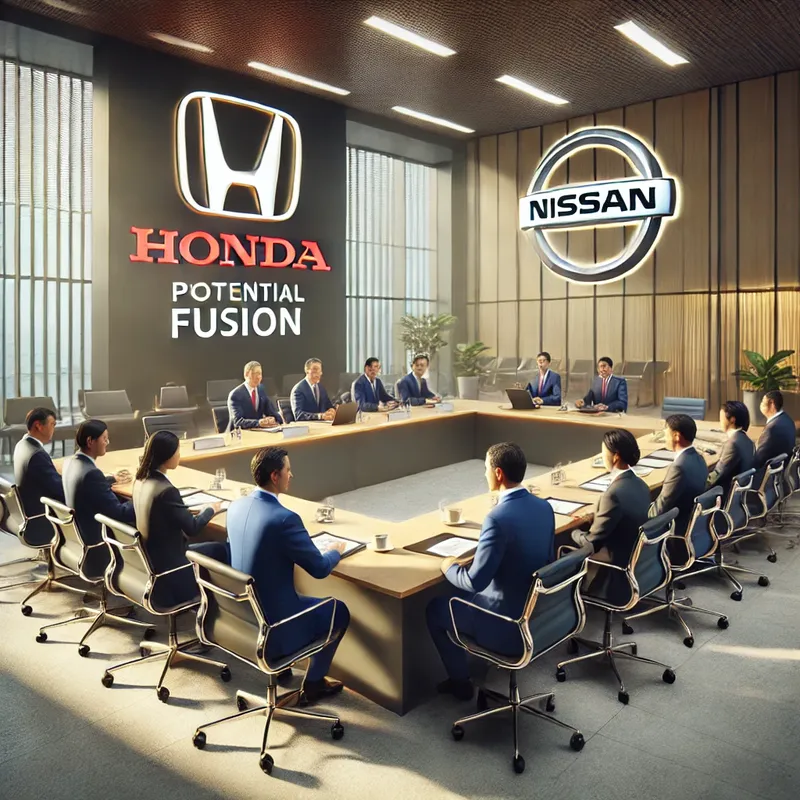

Japanese automakers Honda and Nissan have begun merger talks, joining forces to address global market challenges and strengthen their positions in the electric vehicle sector.
The merger of Honda and Nissan could create the world’s third-largest automaker with a combined annual production of about 7.4 million vehicles, second only to Toyota and Volkswagen.
The merger aims to consolidate resources to effectively compete with rivals such as Tesla and Chinese manufacturers in the fast-growing electric vehicle market. The collaboration may also extend to Mitsubishi Motors, in which Nissan owns a 24 percent stake, further expanding the new conglomerate’s reach.
The merger will optimize operating and R&D costs, accelerate the implementation of technological innovations and the launch of new models. Sharing platforms and technologies may improve production efficiency, while increased scale will strengthen negotiating power with suppliers and partners.
The creation of a new automotive giant could change the dynamics of competition worldwide, influencing future strategies and alliances in the industry. Moreover, an expanded presence in emerging markets, particularly Asia and Europe, could open up new opportunities for growth and consolidation.
One of the main challenges will be integrating the different corporate cultures of Honda and Nissan, each with its own identity and approach to the market. Establishing effective governance and managing the joint operations will be crucial to the success of the merger.
Negotiations are in the preliminary stages, and a memorandum of understanding is possible in the coming weeks. If the deal goes through as planned, an official announcement could take place before the end of the year, marking the beginning of a new era for the Japanese and global automotive industry.