

All cars need fuel to get from point A to point B.
Most vehicles on the road use an internal combustion engine that runs on gasoline or diesel.
On the other hand, all-electric vehicles are powered by electricity. Such cars have a battery that stores energy and one or more electric motors.
When an electric vehicle is in motion, the battery’s energy powers the vehicle from one point to another.

- Plug-in hybrids (equipped with both an electric traction motor and an internal combustion engine);
- Electric hybrids (low-emission vehicles that use a small battery pack to support the main internal combustion engine);
- Purely battery-powered vehicles (they are powered solely by the battery, do not use an internal combustion engine or gasoline to operate, and therefore produce no harmful emissions);
- Hydrogen fuel cell vehicles.

How do electric car batteries work?
Every electric car has a battery pack made up of groups of lithium-ion batteries, or cells, that provide the energy needed for everything from moving the car to using the air conditioning. Typically, the battery pack is located at the bottom of the car, between the wheels.
Another important aspect to consider is that there are two main types of electric cars on the market today. Until a few years ago, most electric cars used nickel-cobalt-manganese (NCM) batteries, which are characterized by:
- High energy density;
- High power;
- High autonomy.
These batteries, although characterized by a lower cost, tend to lose autonomy faster at low temperatures. In addition, they have less power than LFP. Therefore, NCM batteries are still considered to be of higher quality.
Despite the differences in quality, both types of batteries are made according to the same principles. Unlike electricity supplied from a regular outlet, electric vehicle batteries emit direct current (DC). Therefore, to create rotational force, the power must be converted to alternating current (AC).
So, electric cars run thanks to the energy they receive from the battery. This energy is converted into power using an electric motor. However, the power is used to drive the wheels, which provides immediate acceleration.
What are the components of an electric vehicle?
The main components of a battery electric vehicle are:
- Electric motor;
- Inverter
- Battery;
- Controller;
- On-board charger;
- Charging port.

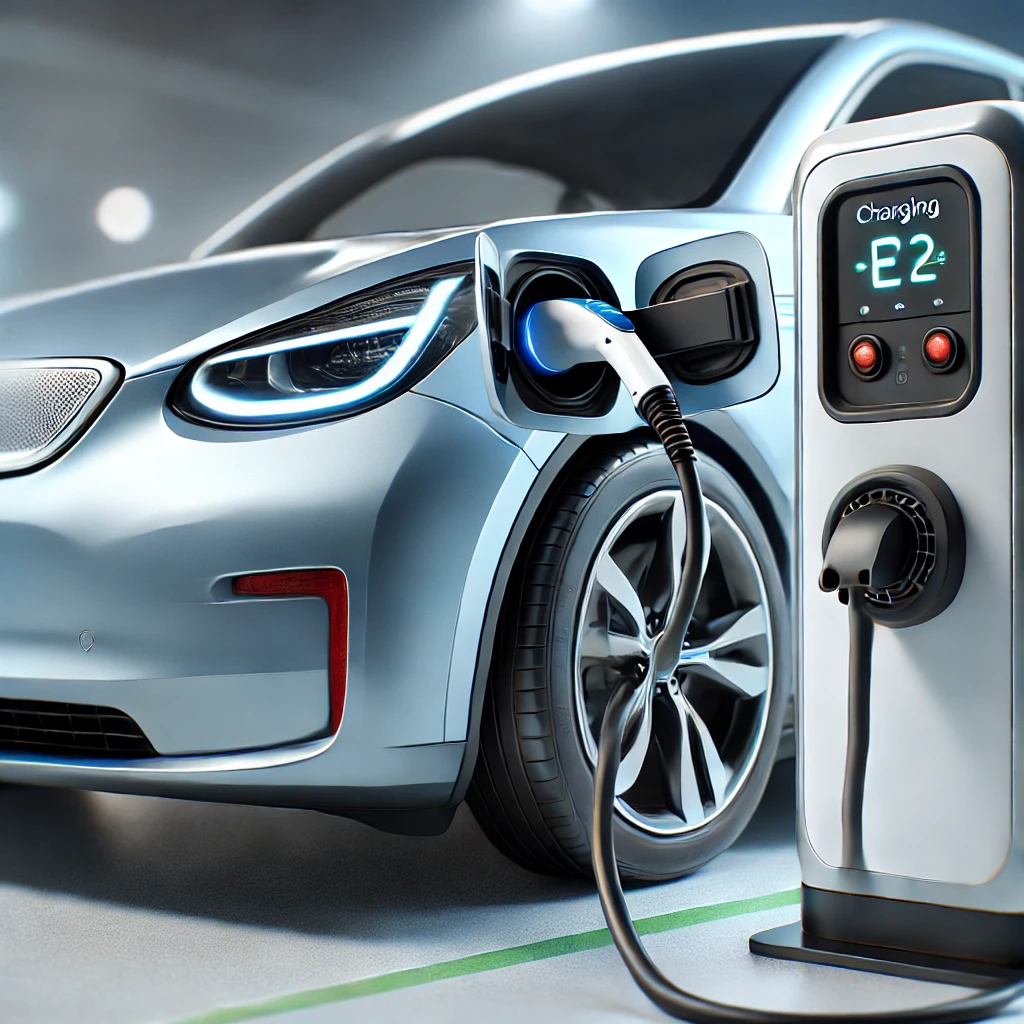
The on-board charger takes incoming AC electricity supplied through the charging port and converts it to DC current for charging the traction battery. It also communicates with the charging equipment and monitors certain battery characteristics such as voltage, current, temperature, and state of charge.
Pros and Cons of Electric Vehicles
Electric vehicles, especially when used on a large scale, can have a beneficial effect on the environment because they produce no tailpipe emissions and do not produce particulate matter or exhaust gases. This results in fewer air pollutants, with all the attendant benefits for human health.
Furthermore, compared to gasoline-powered vehicles, electric vehicles have the potential to significantly reduce greenhouse gas emissions. However, from this perspective, it’s also important to highlight the critical issue that the extraction of the materials needed to produce batteries still has consequences that are certainly not very positive for the environment.
As for the costs of charging an electric vehicle versus refueling a traditional car, it’s impossible to make precise estimates of the economic convenience. This is because electricity and gas prices are subject to constant fluctuations. What’s certain is that if it were possible to charge an electric car at home, the benefits would be significant, in part because residential electricity rates are significantly lower than those you pay when using a public charging station.
Furthermore, electric vehicles are less complex and potentially require less maintenance than traditional vehicles. In fact, in electric vehicles, maintenance tends to focus mainly on the tires and brakes.