
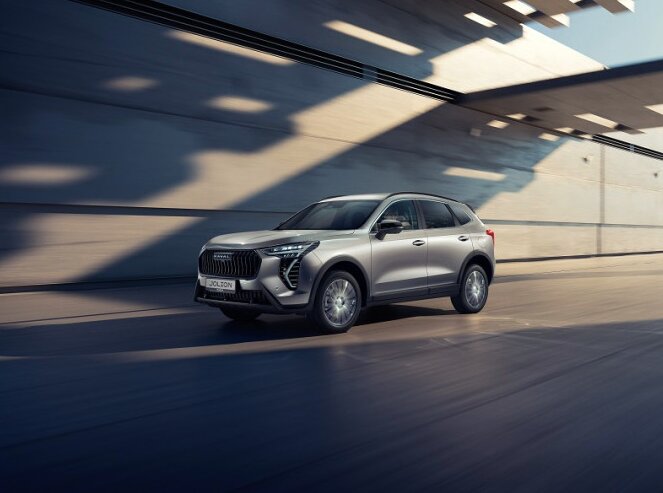
Six months behind the wheel of the Haval Jolion revealed unexpected aspects of the car’s performance. This review offers an honest assessment of the model’s strengths and weaknesses that may influence your purchasing decision, along with a practical look at everyday use.
In recent years, the Haval Jolion has become one of the most talked about crossovers on the Russian market. Interest in it is fueled not only by its affordable price, but also by promises of a rich set of features. However, real-world use often brings its own adjustments to initial expectations. Over the course of six months of active use, nuances become apparent that are not always apparent when purchasing.
In a world where choosing a new car for up to 2.5 million rubles is becoming increasingly difficult, the Jolion is seen as a compromise between modern technology and affordability. But how justified is this compromise? Let’s look at what’s truly pleasing, and what raises questions for those who have already switched to this crossover.
Many owners note that the deciding factor is the choice between front-wheel drive and all-wheel drive. The Premium version with front-wheel drive is equipped with a GW4G15K engine with 143 hp. Often, people choose the more affordable version precisely because of doubts about the reliability of all-wheel drive. For city driving and light off-roading, front-wheel drive is sufficient, unless you set the car for extreme tasks.
The Jolion’s interior is spacious for its class, and its equipment pleasantly surprises: remote start, heated seats, tire pressure monitoring, and other options rarely found in competitors in this price segment. However, not all engineering solutions are equally convenient in everyday use.
Over time, some drawbacks appear. During the first few months, the interior may smell of eco-leather, which gradually disappears. The all-round view cameras aren’t perfect—the lack of a view of the front wheels makes maneuvering in tight spaces difficult. The audio system’s sound quality leaves much to be desired.
In summer, the climate control doesn’t always cool the interior quickly after starting the engine. The automatic reset of the multimedia volume after each start is annoying, requiring constant adjustment. The lack of physical buttons for basic functions also affects usability. Fuel consumption in the urban cycle can reach 13.5 l/100 km.
There are also minor drawbacks: an inconvenient license plate frame that scratches the trunk lid, sills that quickly become dirty, an unsuccessful button for opening the fifth door, and an imperfect mounting of the parcel shelf. The electronic assistants are sometimes too active, and the brakes are not always confident during abrupt driving.
Despite this, the Jolion has important advantages. High liquidity on the secondary market and an extensive dealer network make it possible to buy and maintain a car profitably. The spacious interior and modern design of the restyled version make this crossover convenient for families.
The engine, transmission, and electronics operate reliably, and the dynamics are sufficient for most driving situations. In winter, the climate control system and extensive list of heating options perform especially well. Maintenance costs are lower than many competitors, and extended service intervals save time and money.
A wide selection of accessories on marketplaces allows you to personalize the car, and after the restyling, the exterior has become noticeably more modern. For owners of older budget cars, the Jolion feels like a significant step forward.
The Haval Jolion is a typical car that doesn’t inspire excitement, but reliably handles everyday tasks. For its price, it offers a decent set of options and a modern look, but it is during operation that the compromises made become apparent. For those looking for a practical car with modern features and without the premium pretensions, the Jolion may be a sensible choice. Owners of more expensive and technologically advanced cars should be prepared for its limitations.