

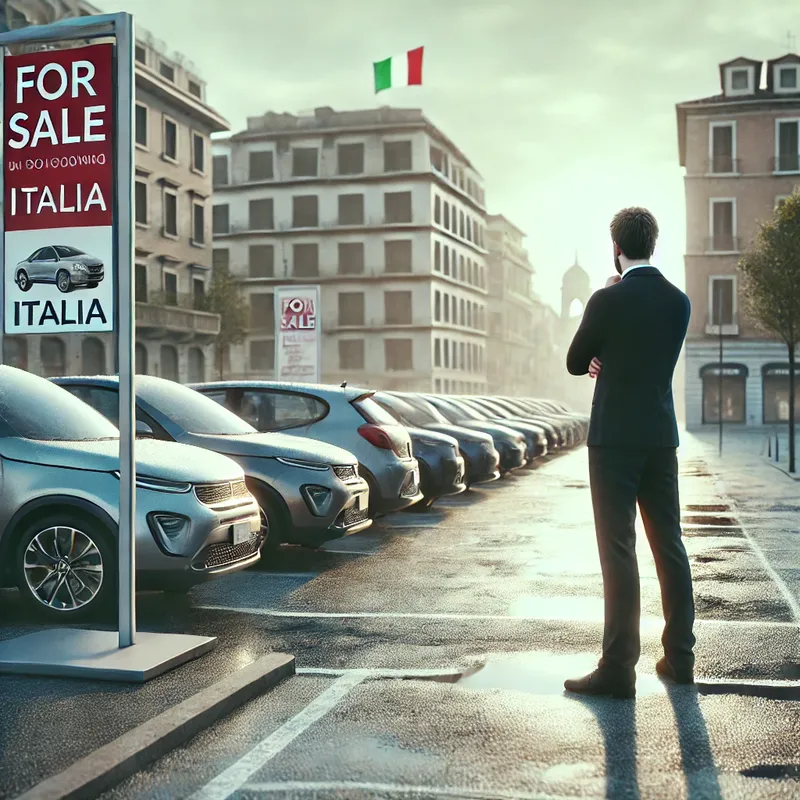

Why are Italians buying fewer and fewer cars?
The Italian car market has seen a significant decline in new car sales in recent years. Several factors contribute to this trend, including rising prices, uncertainty about the future food supply, the economic crisis, and the evolution of consumer habits.One of the main deterrents to new car purchases is rising prices. According to an analysis by the Fleet&Mobility Study Center, only 360,000 cars priced under €20,000 were registered in Italy in 2022, accounting for a market share of 27,800,000. This compares to 42,800,000 cars registered in 2019, accounting for 14,000. Furthermore, cars priced under €14,000 have virtually disappeared from the market. This price increase makes purchasing a new car a daunting prospect for many consumers. Uncertainty about the future of energy supplies is another obstacle. With the advent of new technologies and the emphasis on sustainable mobility, consumers are uncertain about which energy source to choose. A survey by Areté shows that 34% of respondents are hesitant to change cars due to uncertainty about fuel, and only 4% are concerned about excessively long delivery times. This hesitation is further slowing new car sales.The economic crisis has reduced the purchasing power of Italians, making the purchase of a new car an expensive investment. Despite government incentives, many consumers believe they are not enough to offset the high cost of new cars. An Areté survey shows that 60% of Italians consider the incentives insufficient, a 15% increase from three years ago. Moreover, 58% of respondents are asking for further incentives and are waiting for prices to fall before considering buying a new car.Consumer habits are changing, with a growing preference for shared mobility and car-sharing services. Furthermore, young people are showing less interest in car ownership than previous generations. According to a study by Facile.it, the number of young first-time Italian drivers is decreasing every year, and they are getting their licenses later, at an average age of over 22. Between 2012 and 2022, the number of registered cars under 33 years old decreased by 25%, compared to an 8% increase in the car fleet in circulation over the same period.Despite the decline in new car sales, the car fleet circulating in Italy continues to grow, reaching over 40 million vehicles. However, one in four car owners is over 20 years old, indicating a tendency to keep cars for longer rather than replacing them with new models. Of the 40.9 million vehicles, 23% are over 20 years old, 36% are between 10 and 20 years old, and only 41% are under 10 years old. This phenomenon can be explained both by the economic crisis and the rise in new car prices.In conclusion, the combination of high prices, uncertainty about future supplies, the economic crisis, and changing consumer habits has led to a decline in new car sales in Italy. Reversing this trend may require coordinated intervention between the government and the auto industry to make buying new cars more affordable and attractive to consumers.